Category: Travel Guides

  • Burning Season in Vietnam: When, Where & What Travellers Should Know 

    Burning Season in Vietnam: When, Where & What Travellers Should Know 

    If you’ve travelled around Southeast Asia, you’ll probably have heard of burning season. It’s particularly notorious in northern Thailand, where agricultural fires can blanket entire regions in smoke. But what about the burning season in Vietnam? 

    It’s a question worth asking if you’re planning a trip through the northern mountains. Vietnam doesn’t experience the same widespread, predictable burning season as Thailand, but agricultural fires are still common in some rural areas.

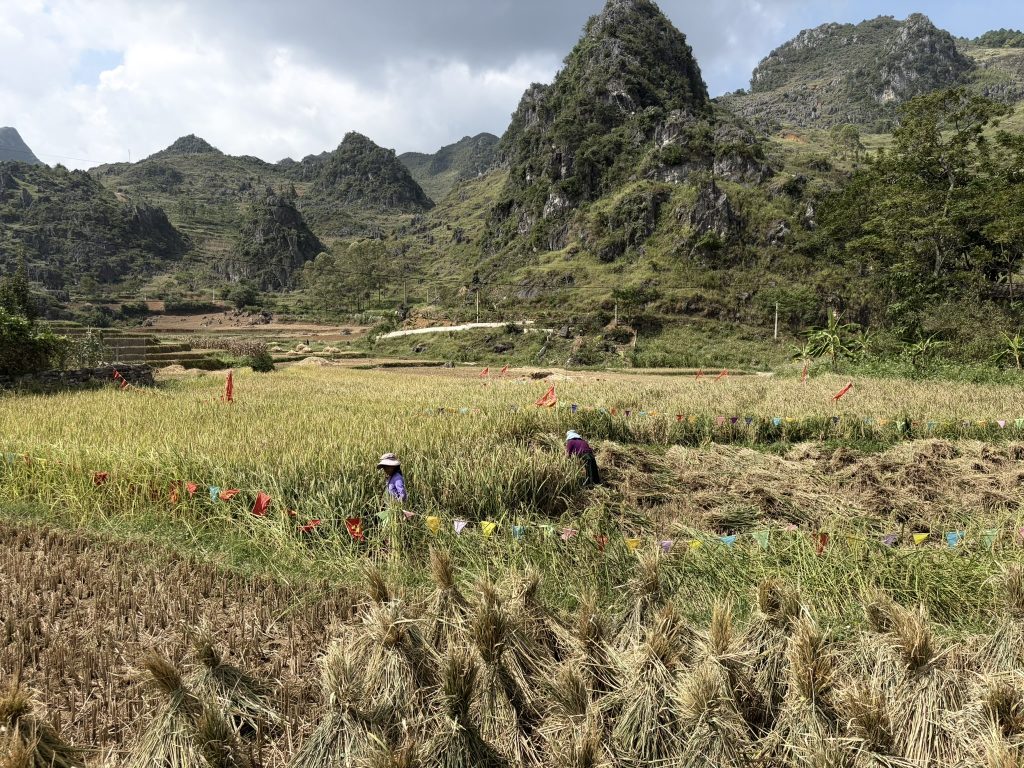
    I noticed this myself in Cao Bang at the end of October 2026. There were fires burning in the rice fields, with blackened patches scattered across the countryside.

    The timing of your visit can also make a big difference to the scenery. Arrive after the harvest and those familiar green or golden rice fields can look rather bare.

    So, when do farmers burn their fields in northern Vietnam, where are you most likely to encounter it, and is it something you need to plan your trip around?

    Does Vietnam have a burning season? Not in the same widespread, predictable way as northern Thailand, but agricultural burning does take place after harvests.

    When does it happen? Around rice harvests, which would be June in northern lowland areas and September–October in many mountain regions. 

    Where is it most noticeable? In rural farming areas across northern Vietnam, including parts of Ha Giang, Cao Bang, Sapa, and Hoang Su Phi.

    Will it affect visibility? It can. Smoke may linger over fields and valleys, particularly when weather conditions prevent it from dispersing. However, encountering a few agricultural fires doesn’t mean an entire region is covered in haze.

    Should you avoid visiting? No. I wouldn’t change an entire itinerary because of the possibility of agricultural burning. Just be aware of local harvest periods and check air quality if conditions look particularly hazy.

    Does Vietnam Have a Burning Season?

    Vietnam doesn’t have one clearly defined nationwide burning season. Instead, agricultural burning tends to happen at different times throughout the year, depending on when farmers harvest their crops.

    Rice-straw burning also takes place elsewhere in Vietnam, including the Mekong Delta. The difference is that there isn’t one nationwide calendar for it, as the timing depends on regional cropping patterns. 

    Research into rice-straw burning in northern Vietnam has identified two particularly relevant periods: around June and October, corresponding with the main rice harvests in the Red River Delta. 

    So, while you might encounter smoke in northern Vietnam, it’s better to think of it as seasonal agricultural burning rather than one big annual burning season.

    The timing isn’t identical across the northern mountains, where altitude, local planting schedules, and weather all influence the harvest.
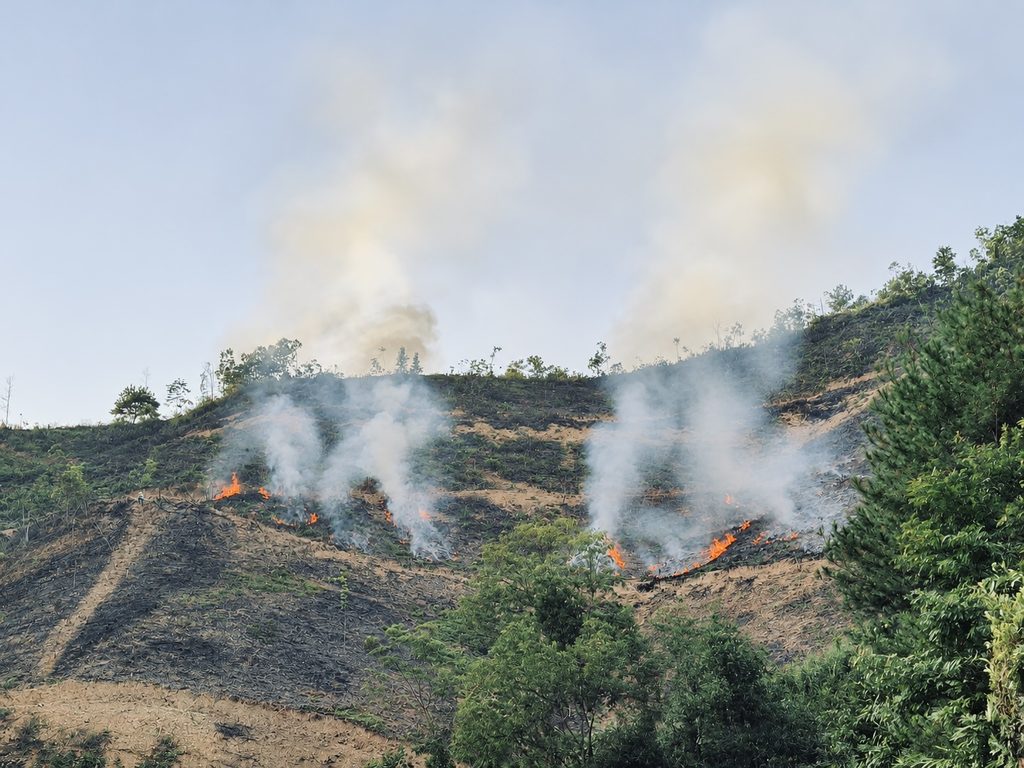
    Crops burning in a rice fields in Vietnam
    Burning season in Vietnam is characterised by intermittent agricultural burning

    Why Do Farmers Burn Rice Fields After Harvest?

    The fires you might see when travelling through northern Vietnam are often farmers clearing leftover rice crops. 

    Once the rice has been harvested, the fields are left with straw, stalks, and stubble. This material needs to be cleared before the next planting cycle.

    There are several ways farmers can manage these leftovers:

    • Burning: A quick way to clear dry rice straw and leftover vegetation from fields.
    • Burning and incorporating ash: Some farmers burn leftover straw and then mix the ash into the soil. Ash contains minerals such as potassium, which can return some nutrients to the soil ahead of the next planting cycle.
    • Collecting: Straw can be gathered and reused for animal feed, mushroom cultivation, and other purposes.
    • Composting: Rice straw can be broken down with other organic material to create compost, which can then be added to the soil.

    Burning is still practised in parts of Vietnam because it’s convenient and relatively inexpensive, particularly where collecting and transporting the leftover material isn’t practical.

    It’s not necessarily a case of farmers deliberately setting fire to entire hillsides or forests. Often, you’re seeing small fires involving piles of leftover rice straw or vegetation in harvested fields.

    Vietnam has introduced environmental regulations to encourage farmers to reuse agricultural waste rather than burn it. 

    The Environmental Protection Law prohibits open burning of crop by-products when it causes environmental pollution, while separate regulations provide penalties for burning near residential areas, airports, and major roads. 
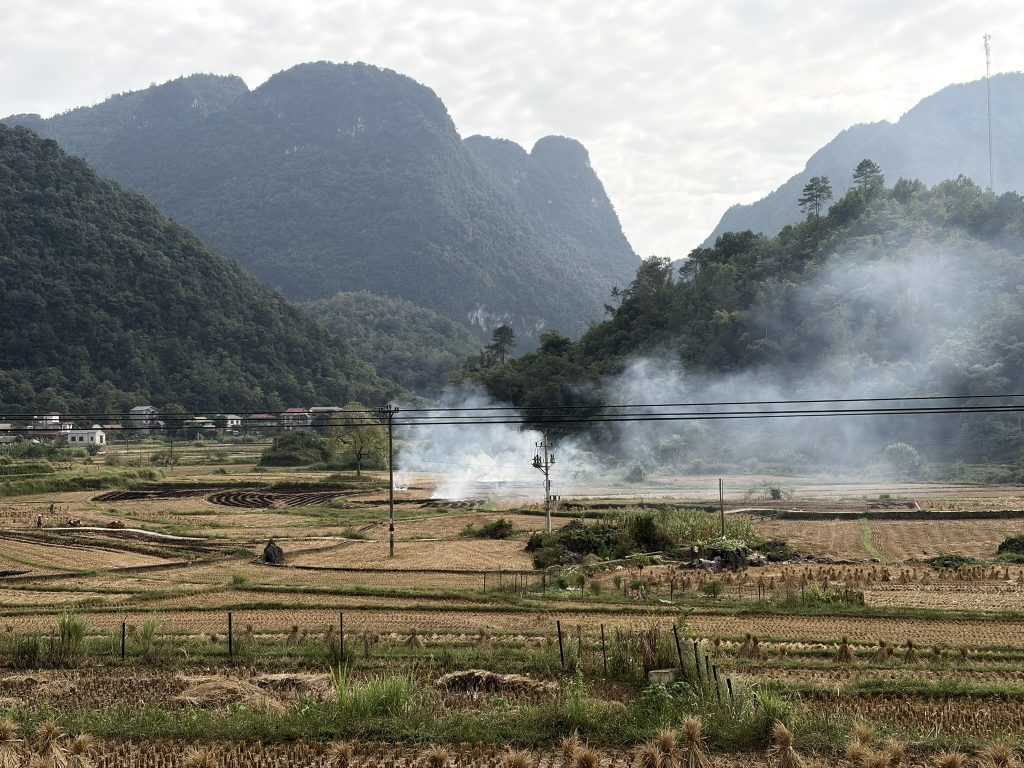
    A rice field burns in the middle of a northern Vietnamese mountain setting
    Burning season in Vietnam happens because farmers need to clear leftover rice crops.

    When Does Burning Season Happen in Northern Vietnam? 

    There isn’t a fixed calendar for agricultural burning, but understanding the rice harvest is the best way to anticipate when you might encounter it.

    Northern Vietnam has two main rice-growing seasons in the lowlands, particularly around the Red River Delta. 

    The ethnic minority communities living in Vietnam’s northern mountains follow slightly different agricultural calendars, with many highland areas growing just one main rice crop each year.

    Here’s a rough guide to the main harvest and burning periods:

    PeriodRegionWhat to expect
    May–JuneNorthern lowlandsWinter-spring rice harvest, followed by possible straw burning. Research around Hanoi identifies June as one of the main periods for rice-straw burning.
    July–AugustLowlands and mountain regionsThe second lowland rice crop is growing, while mountain terraces develop towards the autumn harvest.
    Late August–SeptemberSapa and surrounding mountainsThe main rice harvest begins, with terraces changing from golden to harvested and bare.
    September–OctoberHoang Su Phi, Ha Giang, and Cao BangHarvesting continues across many mountain areas, followed by possible burning of leftover crops. October is also a documented period of rice-straw burning around Hanoi.
    November onwardsNorthern mountain regionsMany fields have been harvested and left bare, although local agricultural burning can still occur.

    These are general patterns rather than guaranteed dates. Harvesting varies with the weather, altitude, and local farming practices, and the timing of burning isn’t necessarily the same as the harvest.

    My Experience with Burning Season in Vietnam

    I travelled through Ha Giang and into Cao Bang Province at the end of October 2026, and agricultural burning was something I noticed throughout the journey.

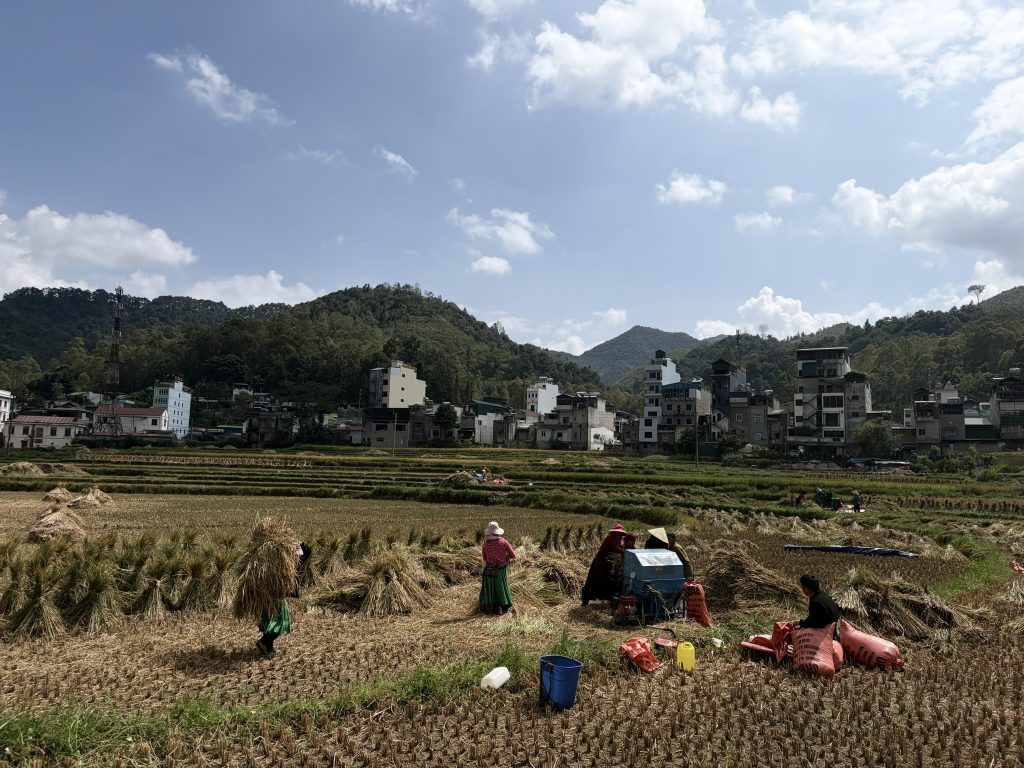
    There were quite a few fires in the rice fields, with farmers burning leftover crops after harvesting. In some places, the fields were still being worked, while others had already been cleared and left with blackened patches across the ground.

    It wasn’t quite what I had imagined when thinking about visiting northern Vietnam’s countryside.

    The timing is worth considering if you’re planning a trip around the rice terraces. I’d originally associated the end of October with the tail end of the harvest season, but it also meant seeing plenty of fields after the rice had been cut.

    This doesn’t mean the entire region was covered in smoke or that the journey was unpleasant. Rather, it was something that appeared intermittently along the route.

    It’s also a reminder that the countryside is working farmland, not a landscape that’s maintained for visitors. Once the rice has been harvested, farmers have another crop cycle to prepare for.

    If you’re visiting northern Vietnam in September or October, I’d expect the appearance of the fields to vary considerably depending on when you arrive.
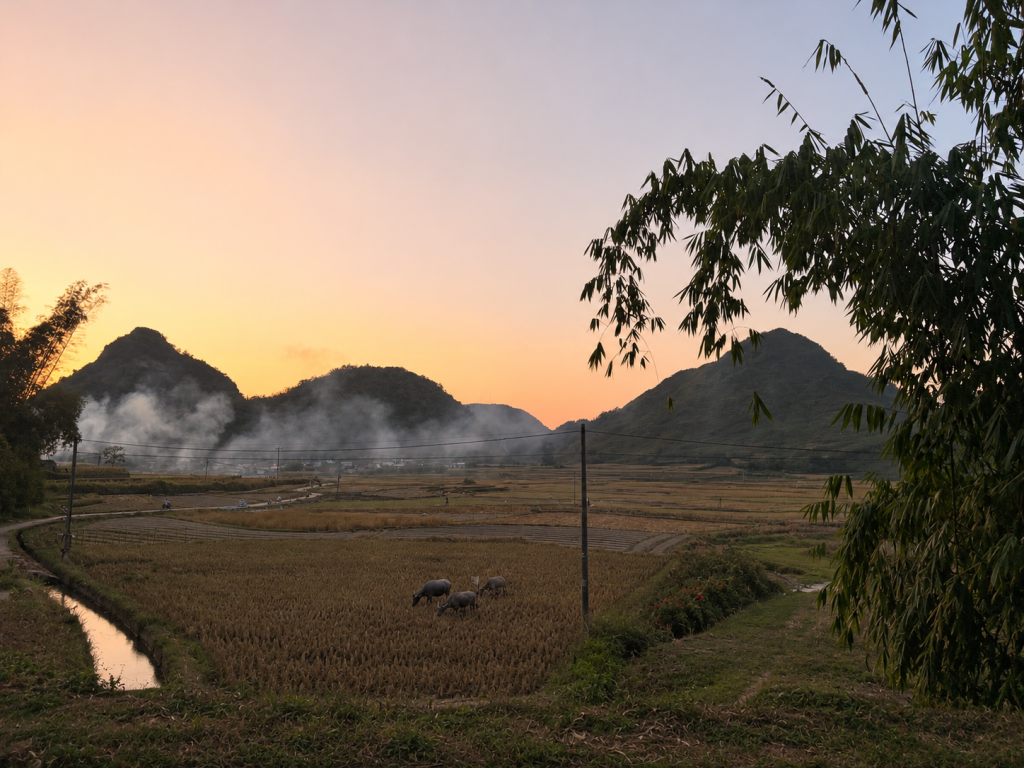
    A sunset scene with burning season causing a lot of smoke on the skyline rising from the rice fields
    Burning of the rice fields in Ban Gioc, Cao Bang Province, in October 2026

    Where Does Agricultural Burning Happen in Northern Vietnam? 

    Agricultural burning isn’t limited to one destination. If you’re travelling through northern Vietnam’s rural farming regions, you may encounter smoke from fields being cleared after the harvest.

    Ha Giang

    The Ha Giang Loop passes through plenty of rural communities and agricultural valleys, where rice farming remains an important part of local life. You may encounter recently harvested fields or evidence of burning, particularly towards the end of autumn. 

    There’s much more to the region than its famous mountain roads. I explore its history and how it became Vietnam’s northern frontier in the story of Ha Giang.

    Cao Bang

    In Cao Bang, the rice-growing valleys around Phong Nam and Ngoc Con are particularly worth knowing about. These areas are known for their open fields and traditional farming landscapes, where agricultural burning can occur after the autumn harvest.

    Sapa

    Sapa is one of Vietnam’s best-known destinations for rice terraces. The Mường Hoa Valley, particularly around Lao Chai and Ta Van, is one of the most popular places to see them.

    The terraces are usually golden around the main harvest in late August and September, making this one of the best times to visit if you want to see Sapa’s rice fields at their most colourful.

    Hoang Su Phi

    South-west of the main Ha Giang Loop route, Hoang Su Phi is another destination known for its dramatic terraced rice fields.

    Its steep hillsides and traditional farming villages make it one of the most impressive places to see Vietnam’s rice-growing landscape. 

    The main harvest generally takes place in September and early October, making this the best time to visit if you want to see the terraces at their golden best.

    What Do Northern Vietnam’s Rice Fields Look Like After Harvest?

    Once the rice has been harvested, the golden stalks disappear, leaving behind short stubble and exposed soil. In some areas, farmers burn the remaining vegetation, creating blackened patches across the fields.

    If you’re visiting in November or December, don’t expect the same golden terraces you’d see during the September harvest. The landscape looks different, but northern Vietnam’s mountains have plenty more to offer beyond rice fields.

    If seeing golden terraces is a priority, I’d plan your trip around the harvest rather than simply choosing autumn.

    Rice farming is a big part of life in the northern mountains. For a closer look at how the terraces are built, maintained and farmed, see my guide to the rice terraces of northern Vietnam.
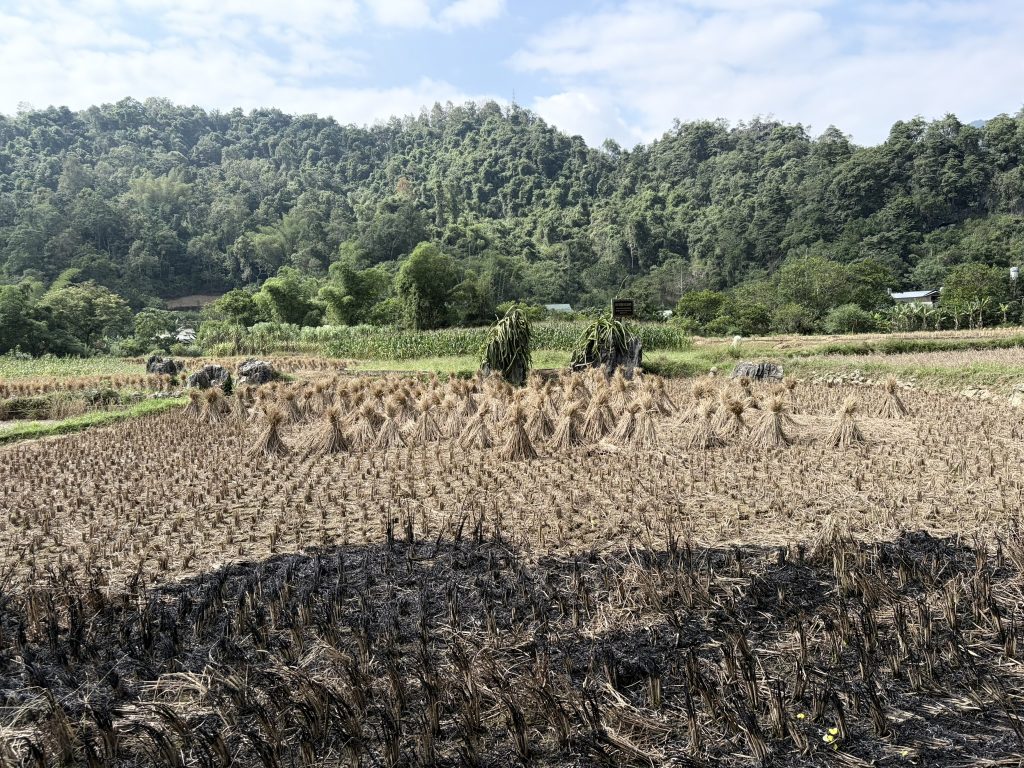
    Blackened rice fields in northern vietnam
    Rice fields can look charred black and bare after the rice harvest

    Is Vietnam’s Burning Season as Bad as Thailand’s?

    No. Northern Thailand has a much more widely recognised burning season, particularly around Chiang Mai, Pai, and Mae Hong Son.

    This generally occurs during the hotter, drier months, with February to April often associated with particularly severe haze. Agricultural fires, forest fires and other pollution sources can combine to create prolonged periods of very poor air quality.

    Vietnam is different.

    While agricultural burning does happen, particularly around rice harvests, it doesn’t create the same predictable, widespread seasonal event across the entire north.

    You might encounter smoke while travelling through rural farming areas, but that doesn’t mean every destination in northern Vietnam will be affected at the same time.

    It’s also important to distinguish local agricultural smoke from other sources of air pollution.

    Hanoi, for example, can experience poor air quality due to traffic, industrial emissions, construction dust, and regional pollution. This isn’t necessarily connected to farmers burning rice fields.

    So, if you’ve been researching Thailand’s burning season and are worried about experiencing the same thing in Vietnam, it’s safe to say the two are not comparable.

    Will Burning Season in Vietnam Affect Your Trip?

    It can, but I’d separate two things: the visual experience and the air quality.

    Reduced Visibility

    Smoke from nearby agricultural fires can make the air look hazy, particularly when you’re travelling through valleys or rural areas.

    This can occasionally affect visibility from viewpoints and mountain passes.

    However, a few small fires in the fields don’t automatically mean you’ll experience widespread smog. The amount of smoke, wind, and weather conditions all make a difference.

    Poor Air Quality

    Burning rice straw releases fine particulate matter, including PM2.5, which can affect respiratory health.

    Even if you can only see a little smoke, that doesn’t necessarily mean air quality is good.

    If you’re travelling in northern Vietnam and notice persistent haze, it’s worth checking the local Air Quality Index (AQI). IQAir and other air-quality monitoring services provide readings for Vietnamese cities and other monitored locations.

    If pollution levels are high, I’d avoid strenuous outdoor activities where possible, particularly if you have asthma or an existing respiratory condition.

    An appropriately fitted particulate respirator, such as an N95 or FFP2, can help reduce exposure when air quality is poor.

    For most travellers, though, the occasional agricultural fire isn’t something I’d let dictate an entire itinerary.

    AQI monitoring coverage is more limited in remote mountain areas, so a reading from a nearby town won’t necessarily reflect conditions in the valley you’re travelling through. 
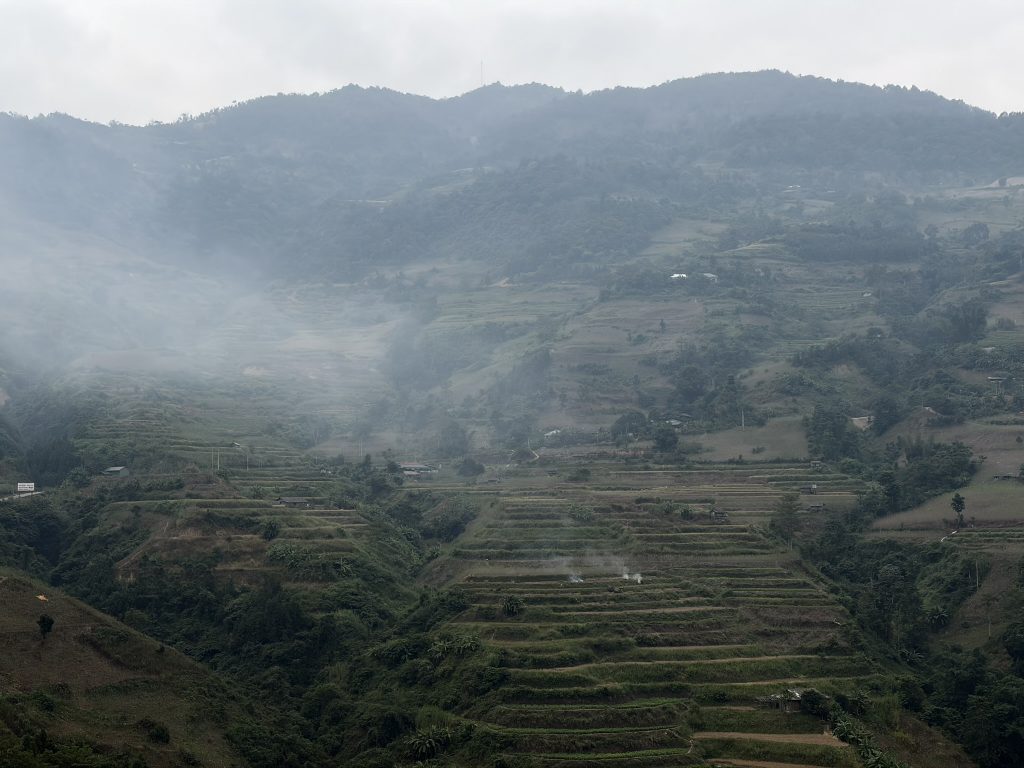
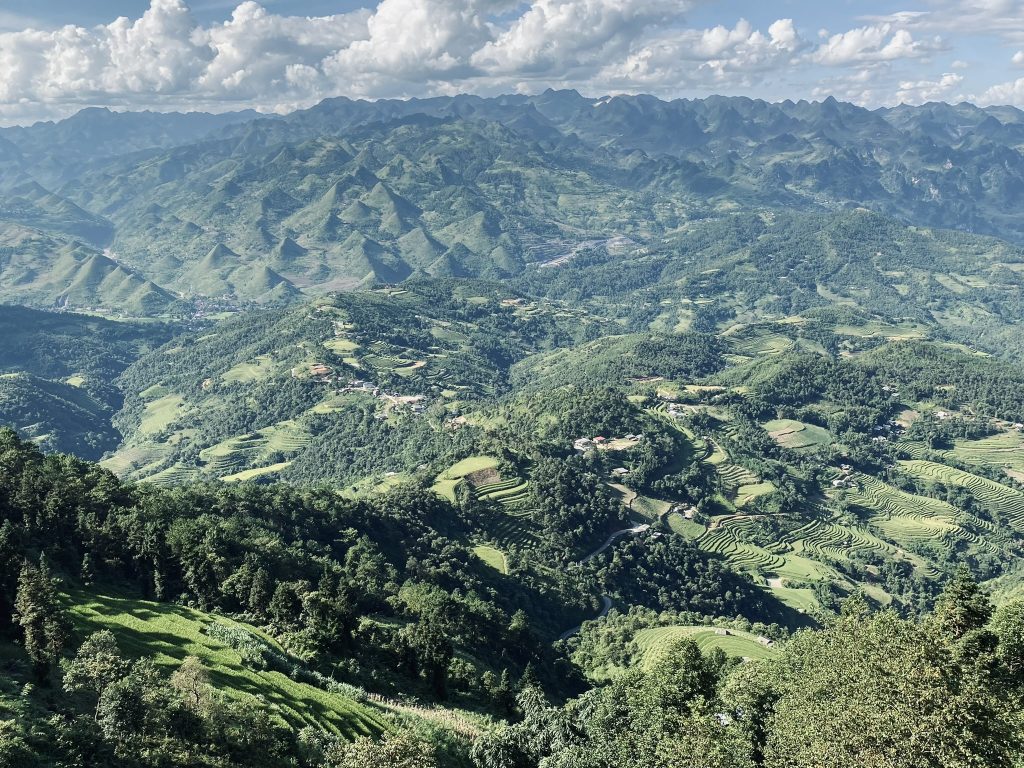
    Smoke rises over an entire valley during burning season in Vietnam
    Smoke from agricultural fires can make the air look hazy

    How to Plan Your Northern Vietnam Trip Around Rice Harvesting

    If you’re particularly interested in seeing the rice terraces, here’s what I’d consider:

    • For golden rice terraces: Aim for September, particularly mid-to-late September in many mountain destinations. Some areas harvest earlier or later.
    • For the Ha Giang Loop: September and early October can offer a good chance of seeing the rice fields before or during harvesting, depending on your route.
    • For Cao Bang: September and October are generally the main rice harvest period in areas such as Phong Nam.
    • For Sapa: Mid-to-late September is generally a good time to see the golden terraces.
    • For Hoang Su Phi: Aim for late September, although different villages can reach harvest at slightly different times.

    I’d also check recent local images on social media and updates before travelling. Rice harvests aren’t something you can predict perfectly months in advance, and the difference between visiting in early September and late October can be quite significant.

    If you’re still preparing for your trip, I’ve also put together 23 things I wish I knew before travelling Vietnam, covering some of the practical details worth knowing before you arrive.
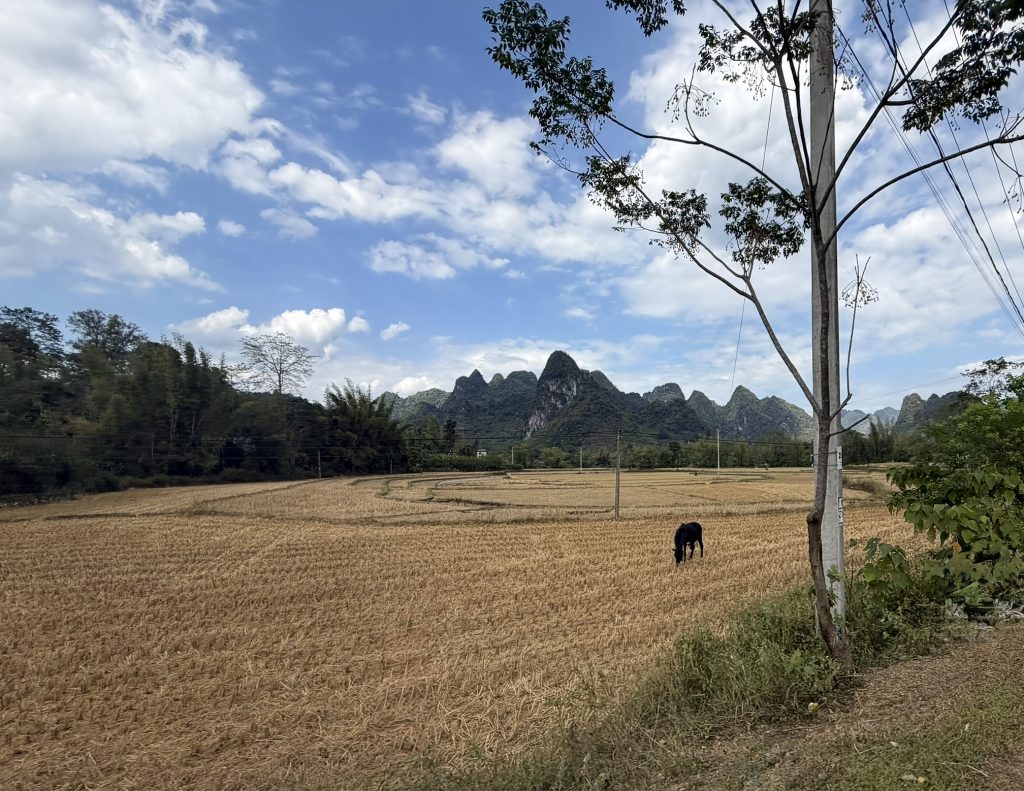
    A horse grazes in the middle of a harvested rice field in Vietnam
    There are still plenty of clear views during burning season in Vietnam

    FAQs About Burning Season in Vietnam

    Does Vietnam Have a Burning Season Like Thailand?

    Not in the same way. Vietnam experiences agricultural burning after rice harvests, particularly in northern rural areas, but it doesn’t have the same widespread and predictable burning season associated with northern Thailand.

    When Do Farmers Burn Rice Fields in Vietnam?

    It depends on the region and harvest cycle. In northern Vietnam, agricultural burning can occur around June and September–October. The timing varies between lowland and mountain farming areas.

    Is November a Bad Time to Visit Northern Vietnam?

    No. November can be a good time to explore northern Vietnam, although many rice fields will have already been harvested. 

    Is the Ha Giang Loop Affected by Burning Season?

    You can encounter agricultural burning along the Ha Giang Loop, particularly around the rice harvest in September and October. However, conditions vary, and it doesn’t mean the entire Loop will be affected by smoke.

    Are the Rice Fields Still Green After Harvest?

    Generally, no. Once farmers have harvested the rice, the fields are left with shorter stubble and exposed soil. Some farmers burn the leftover vegetation, which can leave blackened patches. If you want to see golden rice terraces, aim for September or early October in most northern mountain destinations.

    Is Northern Vietnam Smoky in February and March?

    It can be, but this isn’t necessarily because of local rice-field burning. Northern Vietnam can experience poor air quality during winter and early spring due to a combination of traffic, industrial emissions, weather conditions and regional pollution. Agricultural burning can also contribute to haze, depending on local activity.
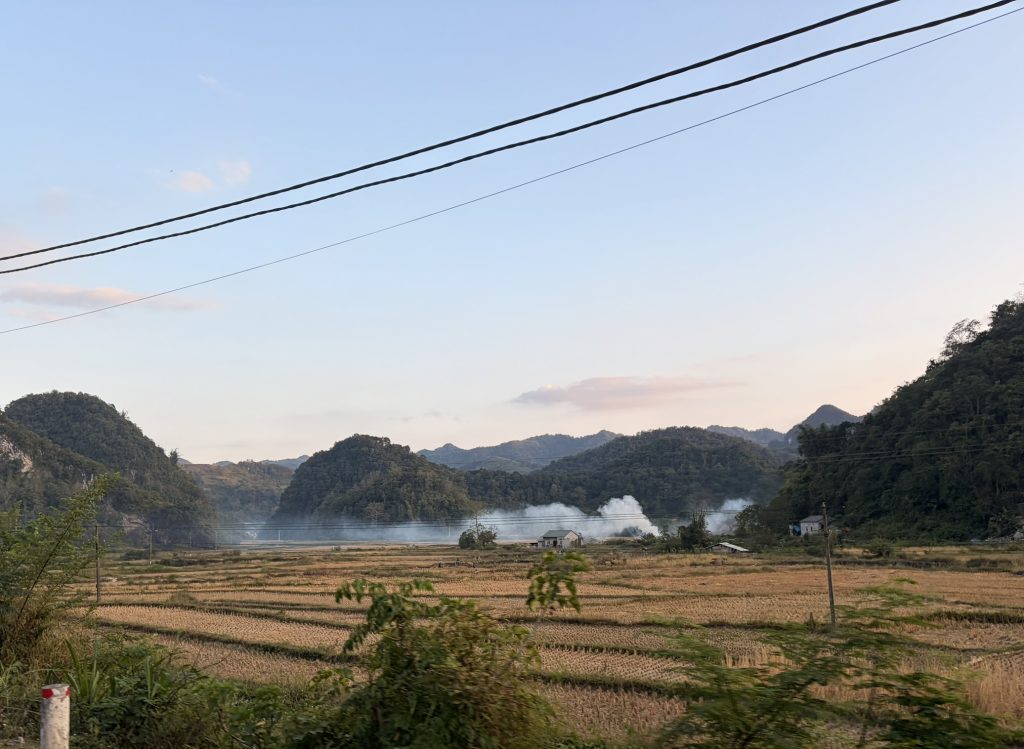
    Smoke rises from a rice valley in Vietnam
    Burning season in Vietnam is very localised and isn’t a reason to reschedule your entire trip

    Burning season in Vietnam isn’t something I’d plan an entire trip around, but it’s worth understanding before you visit. Agricultural fires are part of life in some rural farming areas, and the appearance of the rice fields can change considerably depending on when you arrive.

    If seeing golden terraces is high on your list, try to plan as closely around the harvest as possible… rather than simply choosing autumn. 

    Otherwise, I’d still happily recommend exploring northern Vietnam outside the rice season. There’s far more to these mountains than the rice fields.


    Roamwise by Leaf — Practical guides | Forgotten stories | Meaningful journeys
  • How Much Does It Cost to Travel Vietnam in 2026? A Realistic Budget

    How Much Does It Cost to Travel Vietnam in 2026? A Realistic Budget

    Vietnam is still an affordable country to explore, but I think some of the old advice about travelling around Vietnam on a budget of £10 a day needs a little updating.

    If you are planning a trip to Vietnam in 2026, the good news is that you can still travel comfortably without spending a fortune. Dorm beds, street food, local buses, and Vietnamese coffees can keep your daily spending impressively low.

    But if you want a private room, a few nice meals, some domestic flights, and the occasional experience you absolutely don’t want to miss, your budget will look rather different.

    I travel on a budget, but I’m not interested in making a trip worse just to save a few pounds. If there’s an experience I know I’ll regret missing, I’ll pay for it. I’d rather plan for that expense than spend the trip worrying about every Vietnamese dong.

    Here’s what I think a realistic Vietnam travel budget looks like in 2026, including what day-to-day travel costs, which expenses need their own allowance, and how I’d work out the cost of a three-week trip.

    Make sure to factor sight-seeing into your Vietnam travel budget
    Having a Realistic Vietnam Travel Budget Removes the Worry of Overspending Once you Arrive

    Vietnam Travel Budget: Daily Costs at a Glance

    For a rough starting point, I’d budget the following per person, per day:

    Travel StyleDaily BudgetWhat I’d Expect
    Backpacker£20–30Hostel dorms, local food, budget transport, and mostly free or inexpensive activities
    Comfortable Independent£45–75Private rooms, a mixture of local food and restaurants, convenient transport, and some paid experiences
    Comfortable With Fewer Compromises£75–135Better hotels, more flights, nicer restaurants, and a greater choice of tours and activities
    Luxury£150+High-end hotels, private transport, fine dining, and premium tours

    These are planning estimates, not fixed prices. 

    The figures assume you’re travelling independently, with the backpacker budget based on dorm accommodation and the comfortable independent budget generally assuming a private room shared between two people. Travelling solo and booking private rooms will usually cost more per person.

    The budgets cover accommodation, food, local transport, and modest everyday sightseeing. International flights and major experiences aren’t included, and I’d allow separately for longer intercity journeys if they’re a significant part of your route.

    I’d use around £45–75 a day as a comfortable starting point. That gives you more flexibility than a strict backpacker budget without assuming you’ll be staying in boutique hotels and eating Western food at every opportunity.

    If you’re still planning your route, my Northern Vietnam Travel Guide covers where to go and how to plan your time in the north.

    Where Does Your Money Actually Go?

    Rather than trying to give you an exact price for everything, here are the everyday costs I’d consider when planning a trip.

    Accommodation Costs in Vietnam

    Accommodation is one of the easiest parts of your Vietnam budget to control.

    As a rough guide, I’d expect to pay:

    Type of AccommodationTypical Price Per Night
    Hostel dorm bed£4–11
    Private budget guesthouse room£11–23
    Comfortable hotel or boutique guesthouse£23–45
    Higher-end hotel£45–75+

    These are broad estimates. Prices vary by destination, season, room standard, and how far ahead you book. Resort destinations and peak travel periods can push them considerably higher.

    You can obviously spend much more than that, particularly in beach resorts. Luxury hotels can run into hundreds of pounds a night.

    But I wouldn’t assume you need to.

    Hostels Aren’t Just for Backpackers

    I genuinely think staying in hostels is one of the best ways to travel around Vietnam, even if you’re not the stereotypical backpacker.

    They’re brilliant for meeting people, particularly if you’re travelling solo, and the range has expanded far beyond rows of metal bunk beds and questionable bathrooms.

    And don’t automatically assume a hostel means sharing a room.

    Some have private rooms, which I think are particularly good for couples or friends who want to save money while still having their own space. You get the social side of a hostel without necessarily sleeping in a room with ten strangers.

    For couples, this can make Vietnam particularly good value. A £30–40 private room becomes £15–20 per person when shared between two, and you can do the same with some taxis and private transfers.

    There is no prize for choosing the hardest option.

    Food and Drink Costs in Vietnam

    Food is probably my favourite part of travelling Vietnam on a budget because eating cheaply doesn’t mean eating badly.

    A bowl of phở, a bánh mì, or a local rice dish can cost only a couple of pounds. Many street-food meals fall roughly around 30,000–80,000 VND, depending on the dish and location.

    For food, I’d roughly budget:

    Eating StyleDaily Food Budget
    Mostly street food£5–8
    Street food and local restaurants£9–15
    A mixture of local and Western food£15–27
    Restaurants with few compromises£27–45+

    These are estimates for food and drink, rather than a promise that every meal will fit the same budget.

    The biggest jump usually comes when you start eating regularly in tourist-focused restaurants and cafés, and ordering Western food.

    A local Vietnamese meal might cost a couple of pounds. A burger, pizza, fancy brunch, or cocktail in a trendy tourist area can suddenly turn lunch into a £25–30 affair.

    That’s fine. Sometimes I want the pizza.

    If you’re trying to keep costs down, though, eat Vietnamese food because you actually like it, rather than treating it as the punishment you endure to save money.

    And don’t forget coffee. Vietnamese coffee is cheap enough that I’d happily build a daily coffee into my budget rather than pretending I won’t buy one.

    How Much Does Transport Cost in Vietnam?

    Getting around Vietnam can be cheap, but long distances and frequent stops can push up your transport costs.

    If you’re travelling from Hanoi to Ho Chi Minh City, you aren’t popping down the road. Your route, the number of stops you make, and how you travel between destinations can all make a substantial difference to your total.

    Getting Around Cities

    Grab and Xanh SM are convenient options for getting around. Short taxi journeys can cost only a few pounds, and motorbike taxis are generally cheaper if you’re travelling light and comfortable riding as a passenger.

    Local buses and metro systems are cheaper still, although I tend to use them when I know where I’m going rather than spending 25 minutes trying to decipher a Vietnamese route map.

    Between Destinations

    Sleeper buses and trains can be excellent value, particularly for shorter or overnight journeys. A sleeper bus can also save you a night’s accommodation, although I’d factor comfort and journey time into the decision.

    For longer distances, I’d seriously consider flying. Domestic airlines sometimes offer low promotional fares, although the headline price isn’t necessarily the final cost once you add baggage and other extras.

    That doesn’t mean you should fly everywhere.

    If I have the time, I’d rather take a sleeper bus or train for some journeys and make the journey part of the trip. But if a long bus journey would cost me an entire day and a flight is reasonably priced, I’ll probably fly.

    The budget is there to stop me going overboard every day, not to make me miserable for one very long bus ride.

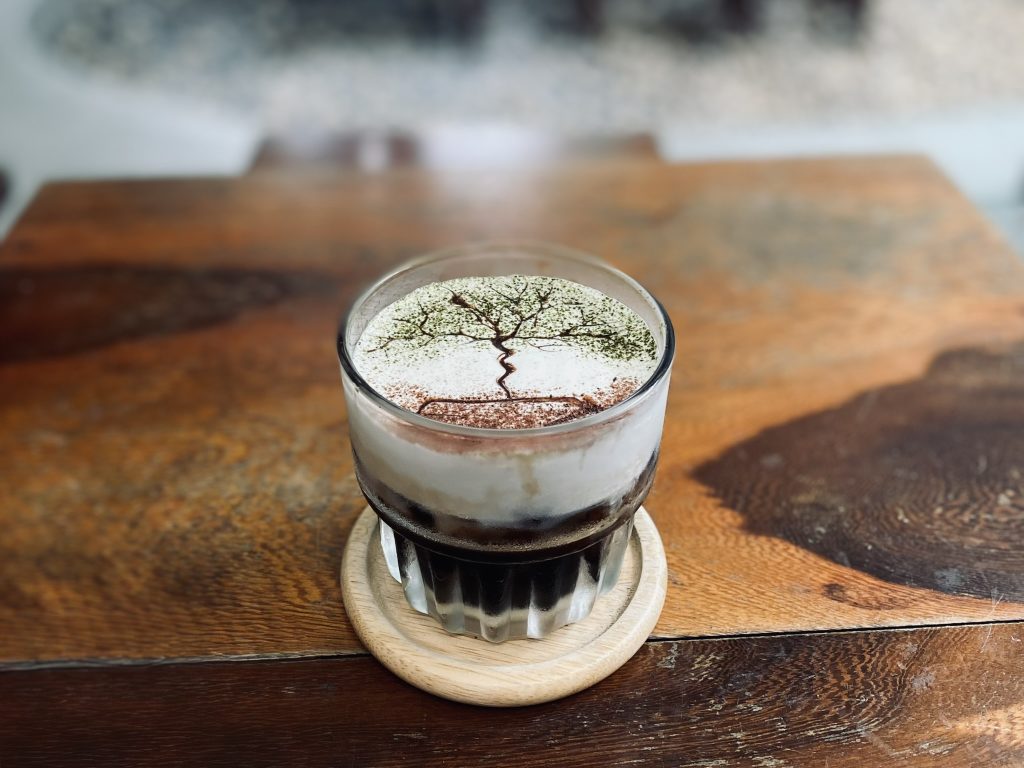
    A Vietnamese coffee with tree art won't break your Vietnam travel budget
    A Daily Vietnamese Coffee will not Ruin your Vietnam Travel Budget

    The Experiences You Need to Budget For

    This is where I’d pay particular attention when working out how much it costs to travel Vietnam.

    Your everyday spending is only part of the picture. The bigger experiences can change the overall cost considerably.

    Think about the Ha Giang Loop, an overnight Ha Long Bay or Lan Ha Bay cruise, Sapa trekking, domestic flights, diving, cooking classes, and other organised tours.

    But there’s an important distinction here.

    Don’t simply add the headline price of a multi-day experience to every day’s normal spending.

    For example, if you pay around $150 for a four-day Ha Giang Loop, that money is spread across four days and may already include three nights of accommodation, meals, transport or riding, and the actual Loop experience, depending on the tour.

    So, sometimes these experiences are actually very good value because one price bundles together several expenses. 

    The important thing is to check exactly what’s included before comparing prices.

    The Loop is about more than the road itself, too. If you’d like to understand more about the region you’re travelling through, read the story of Ha Giang and the history behind the Loop.

    My Vietnam Travel Budget for Three Weeks

    Let’s imagine a three-week trip covering northern, central, and southern Vietnam:

    Hanoi (3 days) → Ha Giang (4 days) → Ninh Binh (3 days) → Da Nang (2 days) → Hoi An (3 days) → Da Lat (3 days) → Ho Chi Minh City (3 days)

    That’s 21 days, with a mixture of cities, landscapes, and time to explore. Ordinary transport between destinations is included in these budgets, but I’d allow extra for major excursions.

    Backpacker Budget: Around £500–750

    I’d budget £500–750 for three weeks if I were travelling on a backpacker budget.

    I’d expect to cover:

    • Hostel dorm accommodation.
    • Mostly local food.
    • Buses, trains, and local transport.
    • Everyday sightseeing, coffees, and laundry.

    This is a proper budget trip, rather than a private-room-every-night holiday. You’ll need to be selective about paid activities, particularly the more expensive tours.

    Comfortable Budget: Around £1,000–1,500

    For a more comfortable trip, I’d budget £1,000–1,500 for three weeks.

    That gives you room for:

    • Affordable private rooms.
    • A mixture of local food and Western-style restaurants and cafes.
    • Convenient transport and the occasional domestic flight.
    • A selection of paid activities and the odd treat.

    Is £1,000 enough for three weeks in Vietnam? It can be, particularly if you share rooms and plan your spending. If you want several expensive experiences, multiple flights, and private rooms throughout, I’d budget more.

    I’d rather work out what the trip I want will cost than set an arbitrary limit and spend the holiday worrying about every purchase.

    If Hanoi is your first stop, my article on why Hanoi’s Old Quarter looks the way it does is a good read before you start exploring.

    A woman looks over a railing at the views below, maybe she is contemplating her Vietnam travel budget
    Your Vietnam Travel Budget depends on what kind of Traveller you are

    Where I’d Save on Costs — and Where I Wouldn’t

    I don’t think the aim should be to spend as little as humanly possible. I’d save on things I’m not particularly bothered about and spend on the things I am.

    For me, that might mean choosing a simple room because I’m out exploring all day, eating local food because it’s delicious, or taking a Grab bike instead of a car taxi when it’s convenient.

    But I’d happily spend more on a Ha Giang Loop company I trust, a cruise I really want to do, a good guide, or a domestic flight that saves me an exhausting journey.

    I’d also pay for a nicer room after several nights in dorms, or a really good (treat) meal when I fancy one.

    Your priorities might be completely different. Perhaps you love a beautiful hotel but aren’t interested in organised tours. Perhaps food is the highlight of your trip, or you’d rather spend your money on diving.

    That’s why I wouldn’t build a Vietnam budget around somebody else’s idea of what a good trip looks like.

    Other Travelling Costs to Remember

    Your daily budget won’t cover everything, so I’d keep a separate allowance for the less exciting expenses.

    Visa

    Visa requirements and fees depend on your nationality and the length of your stay. Some travellers can enter Vietnam without a visa for a limited period, while others need to apply and pay a fee in advance. 

    👉 Check the current eligibility rules, permitted stay, and fees on Vietnam’s official immigration website before travelling.

    Travel Insurance

    Particularly important if you’re planning motorbiking, trekking, or other activities. Check that your policy covers what you’re actually doing.

    SIM or eSIM

    You’ll want data for maps, Grab, translation, bookings, and keeping in touch. Compare the cost of a local SIM with an eSIM before you travel.

    ATM Fees and Cash

    I’d use a combination of a travel card and Vietnamese dong. Vietnam has plenty of places that accept cards, but cash is still useful for smaller businesses, markets, street food, and rural areas.

    👉 Always have some smaller notes available rather than trying to pay for a 40,000 VND meal with a 500,000 VND note.

    Laundry and Tips

    Laundry isn’t glamorous, but it’s necessary if you’re travelling for several weeks. Tipping isn’t generally expected in Vietnam, but I always round up the bill for a coffee or a meal. I also keep a little aside for guides and particularly good service during excursions.

    Factor your essential trips into your Vietnam travel budget or put a little money aside as a safety net
    If You Want to do the Big Multi-Day Excursion, I Recommend Putting a Little Extra Aside

    A Few Ways to Make Your Vietnam Travel Budget Go Further

    A few practical choices can make a noticeable difference without turning your holiday into a constant hunt for the cheapest option.

    • Stay longer in each place. Constantly moving means paying for transport, check-ins, taxis, and sometimes another tour every time you change destination.
    • Use accommodation strategically. Mix dorms, private hostel rooms, and occasional hotels rather than assuming you need the same standard every night.
    • Take overnight transport when it makes sense. A sleeper bus can save you a night’s accommodation as well as getting you to the next destination, provided you’re happy with the journey.
    • Check what’s included in tours. Don’t panic when you see a $150 tour or cruise price. Work out what it covers before deciding how much extra to budget.

    And don’t forget to allow for the things that matter to you.

    There are plenty of other little things worth knowing before you arrive, too. I’ve shared them in my guide to 23 things I wish I knew before travelling Vietnam.

    Vietnam Travel Budget FAQs

    Is Vietnam Expensive to Travel in 2026?

    Vietnam can still be a very affordable destination. I’d use around £20–30 a day for budget backpacking and £45–75 a day for comfortable independent travel as starting estimates, before international flights and major experiences.

    Is a £1,000 Vietnam Travel Budget Enough for Three Weeks of Travelling?

    It can be, depending on your accommodation, transport, and activities. You’ll need to keep a close eye on spending if you want private rooms throughout, several domestic flights, and expensive tours. Remember to account for what’s included in multi-day packages rather than adding the full price to your ordinary daily costs.

    How Much Should I Budget for Food in Vietnam?

    I’d allow around £5–8 a day for mostly street food, £9–15 for a mixture of local food and restaurants, and £15–30+ if you’re regularly eating Western food and in tourist-focused restaurants. Your actual spending will depend on where you eat and what you order.

    How Much Should I Budget for the Ha Giang Loop?

    That depends on the length and type of tour. A multi-day package can include accommodation, meals, transport or riding, and the experience itself, so don’t simply add the entire tour price on top of four days of normal accommodation and food costs.

    Check exactly what your chosen tour includes before comparing prices.

    Do I Need a Visa for Vietnam?

    It depends on your passport, the length of your stay, and your entry arrangements. Check the current requirements through Vietnam’s official immigration website before booking or travelling.

    A lush green landscape with mountains and a valley filled with houses
    I Wouldn’t Build a Vietnam Budget around Somebody Else’s Idea of what a Good Trip Looks like… Work Out What Matters to You

    The best way to budget for Vietnam is to work out what your everyday spending will look like, then add the cost of the experiences you don’t want to miss.

    Once you have those figures, you’ll have a much clearer idea of what your Vietnam travel budget will look like — and where you have room to be flexible.


    Roamwise by Leaf — Practical guides | Forgotten stories | Meaningful journeys
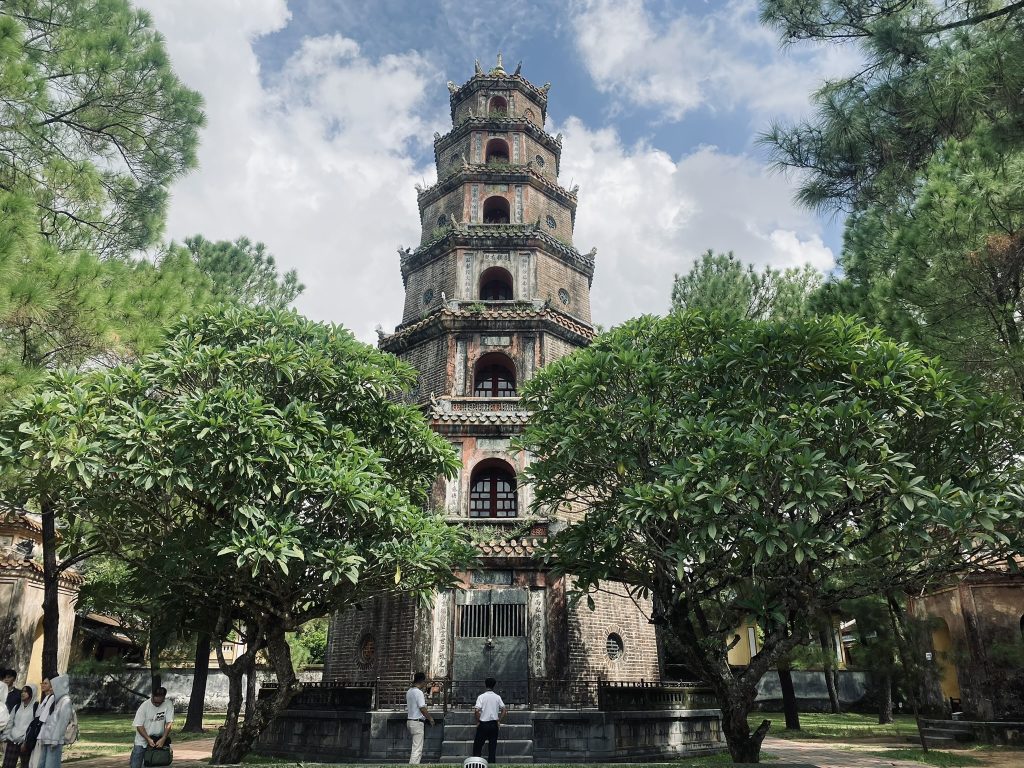
  • The Rice Terraces of Northern Vietnam: How They Work, Who Farms Them & Where to See Them

    The Rice Terraces of Northern Vietnam: How They Work, Who Farms Them & Where to See Them

    If you’ve ever looked at the rice terraces of Northern Vietnam and wondered how on earth anyone built them, you’re not alone.

    I’ve spent a lot of time travelling through the north, and I’ve watched people plant rice by hand in thick mud, harvest it, dry it in the sun, and carry it home. 

    The more I’ve seen, the more I’ve realised that these terraces are far more interesting than the surrounding mountain view.

    So, how do they work, who farms them, and where should you go to see the best ones?

    September–October is generally the time to visit if you want to see golden rice terraces, although exact harvest dates vary by location and altitude.

    Hoang Su Phi is generally at its best around September and October, while places such as Xa Phin can be later in the season.

    You can also visit during planting season, when flooded terraces reflect the sky and mountains, or during the growing season when the fields are bright green.

    Personally, though? I’d take the golden season.

    Why Do Rice Fields Need to be Terraced?

    This is probably the question I would have asked first if I hadn’t simply accepted the landscape as something that had always been there.

    The short answer is: the mountains are too steep for conventional wet-rice farming.

    Rice grows well with its roots in shallow water, but on a steep mountainside that water would simply run downhill.

    So instead of trying to farm the mountain as one enormous slope, farmers have created a series of relatively level fields, one above another.

    Each terrace has an earth or stone bank around it to retain water, while irrigation channels help move water through the different levels.

    The terraces solve several problems at once. They allow farmers to:

    • create usable agricultural land on steep slopes
    • retain and control water
    • reduce water rushing straight downhill
    • help limit soil erosion
    • make use of land that would otherwise be extremely difficult to cultivate

    The terraces don’t make the mountains less steep. They make the mountains farmable.

    And that’s something I think is easy to miss when you’re looking at them from a viewpoint.

    If you’re particularly interested in how the landscape and communities of Ha Giang have developed, my guide to the history of the Ha Giang Loop goes into much more detail. 

    How are the Rice Terraces of Northern Vietnam Made?

    This is the bit I’m most interested in because, honestly, standing beside one makes you realise how much work must have gone into creating it.

    These aren’t naturally occurring steps in the mountains.

    They’re agricultural systems that have been created and maintained by people over generations.

    The exact construction varies according to the landscape, soil, and local farming practices, but the basic idea is surprisingly straightforward.

    First, a suitable section of mountainside has to be worked into a relatively level area. The soil is cut and moved to create the terrace, with a bank formed around the edge to hold everything in place.

    Those banks can be made from compacted earth, stone, and other locally available materials. Traditional systems can also use things such as bamboo or branches.

    Then comes the really important part: water.

    The terraces aren’t just a series of pretty steps. They’re connected.

    Water is brought into the fields and managed so that it can move through the different levels rather than disappearing straight down the mountainside. Traditional irrigation systems use natural water sources, including streams, with channels and pipes helping move water through the fields.

    And once you’ve built a terrace, the work isn’t finished.

    The banks need maintaining. Water channels need managing. Soil needs preparing. Fields have to be planted, tended, and harvested.

    It’s not a landscape that was built once and left alone; it’s continually maintained.

    That’s probably the biggest thing I hadn’t appreciated before spending time around the fields.

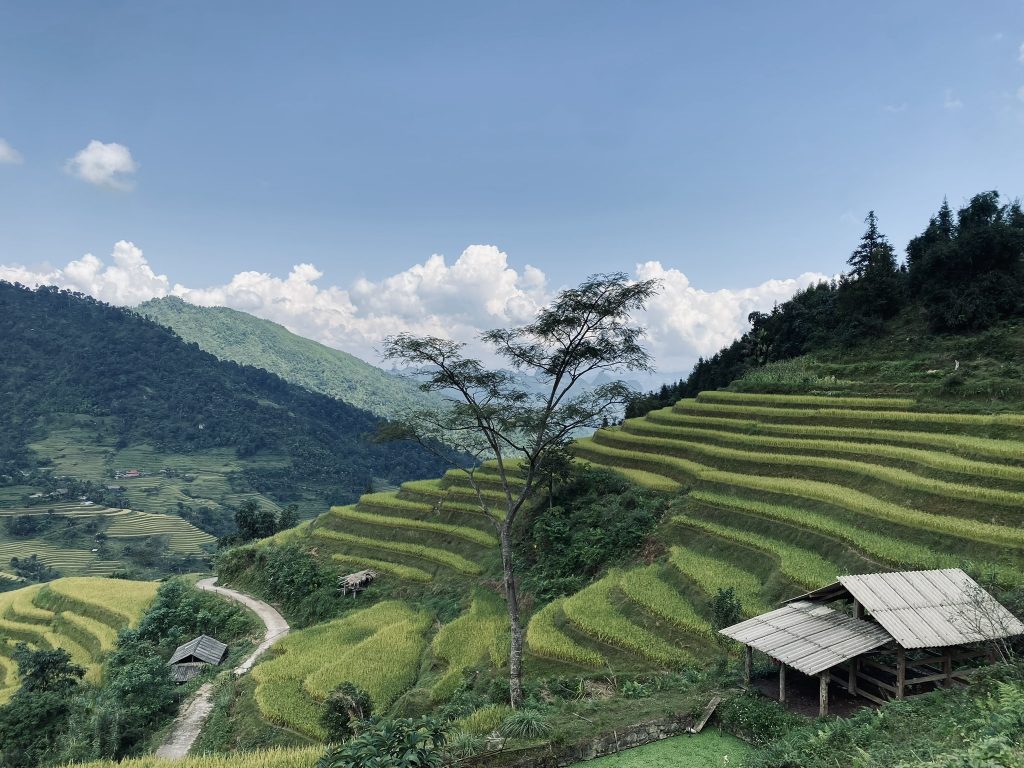
    A Vietnamese landscape with terraced green rice fields and blue skies
    Because the mountains of Northern Vietnam are too steep for conventional rice growing, the farmers had to cut leveled fields one above the other into the mountainside

    From Planting to Harvest: What Actually Happens?

    Preparing the Rice Fields

    Before the rice is planted, the terraces have to be prepared for another growing season.

    Farmers first need to clear and repair the fields, including fixing sections of terrace bank that have eroded and making sure water can move through the irrigation system properly.

    Then the soil is worked and loosened. Traditionally, this could involve hand tools or animals such as water buffalo pulling a plough, particularly on steep, narrow terraces where larger machinery isn’t practical. 

    Buffalo are still used by some farmers in the northern uplands, while mechanical ploughs are also used where the terrain and farming system allow. 

    Once the soil has been prepared and the fields are ready, water is brought into the terraces.

    And this is where the landscape starts to look very different.

    Planting the Rice

    This is one of the stages I’ve watched most closely.

    People work their way through the flooded terraces, planting seedlings by hand into the mud. It’s much more physical than the finished landscape suggests.

    From the road, you see neat rows of green plants. You don’t necessarily think about the fact that somebody had to stand in that mud and put them there.

    Traditional rice transplanting remains an important part of terrace farming in the northern mountains, although planting times vary depending on the location and growing season.

    I’ve watched farmers moving through the terraces section by section, working in conditions that look considerably less comfortable than the finished fields make them appear.

    The Mirror Season

    Around the same time as planting, the flooded terraces can become almost completely reflective.

    This flooded period is often described as the “mirror season”, when the water-filled fields reflect the sky and surrounding mountains. 

    Depending on the location and timing, you may see the terraces before the seedlings have been planted or while farmers are already working their way through the flooded fields.

    The timing varies by location, but late May to early June is generally when you’ll see the terraces at their most reflective.

    I actually think this is one of the best times to understand how the terraces work. Without mature rice covering the fields, you can clearly see the water being held across all those carefully shaped levels.

    As the seedlings take hold and begin to grow, the reflections gradually disappear beneath the green rice.

    Growing the Rice

    Once planted, the terraces gradually turn green.

    This is when the landscape looks completely different from the golden fields you see in photographs of harvest season.

    Water management remains important throughout the process, and farmers have to keep the terraces and their banks in good condition.

    The whole system relies on knowing the land extremely well.

    And that knowledge isn’t something that appeared overnight. Terrace farming has been maintained and adapted across generations.

    Harvesting the Rice Terraces of Northern Vietnam

    Then comes the part everyone photographs — the rice turns golden and eventually it’s time to cut it.

    I’ve watched people cutting the rice, gathering it together, and carrying it away from the fields.

    And this is where something else I noticed started to make me curious.

    Where are all the men?

    Rice farming also brings seasonal changes to the northern landscape. After the harvest, some farmers burn leftover rice straw, which can leave blackened patches across the fields. I’ve written more about agricultural burning in northern Vietnam and when it happens.

    Two women harvest the rice in the rice fields of northern Vietnam

    Who Actually Farms the Rice Terraces of Northern Vietnam?

    One of the things I’ve noticed while travelling through Northern Vietnam is how often the people I see doing the most visible, hands-on work in the rice fields are women.

    But the answer isn’t simply that women farm the rice and men don’t.

    Different stages of the work involve different people, and the division of labour can vary between communities and households.

    From what I’ve observed and learned, men can be particularly visible during heavier preparation work, while women can be particularly visible during tasks such as transplanting and tending the rice. Harvesting can involve both men and women.

    That actually makes sense of something I had noticed.

    I’m often seeing the fields during planting or tending, rather than seeing every stage of the agricultural cycle.

    And during harvest, the distinction becomes even less obvious.

    I’ve watched people cutting and gathering the rice, then carrying it away from the terraces once the work is finished.

    So if you’re travelling through the mountains and wondering where the men are while a field full of women is planting rice, the answer may simply be that you’re looking at one particular part of the farming process.

    It’s a good reminder that what you see from the roadside is only a tiny snapshot of how a household makes its living.

    What Happens to the Rice After it is Cut?

    The harvest doesn’t end when the rice is cut. The grain still needs to be separated from the stalks — a process known as threshing.

    In some places, this is done by hand in the fields, while machinery is also used. Once the grain has been separated, it is spread out to dry in the sun. Depending on the farmer and the location, you may see this happening in the fields or along the roadside.

    When the rice is dry, it is gathered into large red bags and carried home, while the remaining rice stalks may then be burned in the fields.

    There’s something oddly satisfying about seeing this part of the process because, by then, the golden landscape suddenly makes sense.

    Those fields didn’t turn golden for the benefit of tourists. That’s the crop. It’s the end result of months of work.

    💡 Roamwise Tip

    Practices vary between farmers and locations, so I wouldn’t assume that every field is treated in exactly the same way.

    Workers tending a rice field in Northern Vietnam where the rice has been cut and is being bagged
    Once the rice is cut the grain still needs to be separated from the stalks in a process known as threshing

    Why Rice Matters So Much in Northern Vietnam

    Rice is obviously important throughout Vietnam — it’s a staple of the Vietnamese diet and a major agricultural crop.

    But in the northern mountains, rice terraces have another layer of importance.

    For many communities, the terraces are a source of food and livelihood, as well as being part of a much older relationship with the land.

    The rice terraces of Northern Vietnam have been built and maintained by different ethnic communities, including H’Mong, Dao, Tay, and Nung peoples, depending on the region.

    And the rice itself isn’t simply a crop in the background.

    In places such as Ha Giang or Sapa, rice and the terraces have played an important role in the lives and culture of the local community for generations.

    This is why I think it’s worth learning a little about the terraces before visiting them.

    Otherwise, you’re looking at an incredible landscape without necessarily understanding why it exists.

    Image of a rice field in northern vietnam
    Rice a staple of the Vietnamese diet and a major agricultural crop

    Where to See the Rice Terraces of Northern Vietnam

    There are plenty of places where you can see the rice terraces of Northern Vietnam, but I wouldn’t try to visit every famous terrace destination just so you can say you’ve ticked them off.

    If I were planning a trip around the rice terraces, these are the places I’d pay attention to.

    Hoang Su Phi

    This is my number-one recommendation.

    I’ve been to Hoang Su Phi independently rather than simply passing through on a Ha Giang Loop itinerary, and in my opinion, this is a much better place to appreciate the rice terraces than simply seeing them from the Loop.

    Hoang Su Phi is spread across the western part of Ha Giang, with huge areas of terraced farmland running through different mountain communities.

    The scale is impressive, but what I particularly like is that the terraces don’t feel like one neatly packaged tourist attraction.

    They’re spread across the landscape.

    The terraces here have been built and cultivated by different ethnic communities for generations, including Nung, Dao, Tay, and La Chi communities. Hoang Su Phi’s terraces were recognised as a national heritage site in 2012.

    Go in September or October if you want the golden fields.

    If you have time, I’d stay rather than simply drive through. This is somewhere I’d give myself a little time to explore, walk around and actually watch the agricultural landscape rather than rushing between viewpoints.

    And because the area is so spread out, having a local place to stay or guide can make much more sense than trying to see everything independently in a single day.

    Sapa

    Sapa is probably the easiest place to see rice terraces if you’re looking for an established tourist destination with plenty of accommodation and trekking options.

    The Muong Hoa Valley is the main area, with terraces around villages including Lao Chai and Ta Van. The terraces here have been cultivated by H’Mong and Dao communities for generations.

    The advantage is convenience.

    The disadvantage is that Sapa is much more developed and touristy than places such as Hoang Su Phi.

    I’d choose Sapa if convenience matters to you. I wouldn’t choose it purely because someone told you it’s the best place to see rice terraces.

    💡 Roamwise Tip

    If you’re choosing between Hoang Su Phi and Sapa, I’d personally choose Hoang Su Phi for the quieter experience and more immersive landscape, while Sapa makes more sense if convenience and established trekking infrastructure are your priorities. 

    Mu Cang Chai

    Mu Cang Chai is one of the most famous rice-terrace destinations in Vietnam, and for good reason.

    The terraces here are enormous and particularly impressive around areas such as La Pan Tan and Che Cu Nha.

    If your priority is huge, dramatic terrace landscapes, this is one to consider.

    The terraces are cultivated by H’Mong, Dao, and Tay communities, and the main harvest period is generally around September and October, although the precise timing varies.

    I think Mu Cang Chai makes more sense if you’re specifically planning a trip around the rice terraces rather than trying to squeeze it into an already packed Northern Vietnam itinerary.

    If you’re planning a wider trip through the region, my Northern Vietnam travel guide covers the places I’d prioritise and how I’d put them together. 

    Rice terraces peering through the scenery of norther Vietnam

    My Top Off-the-Radar Rice Terraces in Northern Vietnam 

    Xa Phin, Near Ha Giang City

    If you want somewhere that still feels genuinely off the beaten path, I’d look at Xa Phin.

    I visited independently and barely saw another traveller.

    It’s a small village surrounded by rice terraces and mountains, and that’s part of what makes it so appealing to me. You’re not arriving somewhere where the main experience is competing with a stream of tour groups for the same viewpoint. 

    You’ll need to reach Xa Phin by motorbike, but you can rent one in Ha Giang City. I used Style Motorbikes, and once you turn off the main highway, the road becomes very bumpy but sees very little traffic. It’s much more about taking your time than rushing to get there.

    The rice terraces are incredible, but they’re not the only reason I’d make the journey.

    If you continue higher into the hills, you’ll eventually reach tea plantations and little tea shops. I thought that was particularly cool because it gives you another reason to explore beyond the rice fields themselves.

    The rice season here can also be slightly later than in some other northern destinations, with harvest around mid-October.

    It’s my wildcard recommendation for anyone who has already seen the obvious Northern Vietnam rice field destinations and wants somewhere that still feels like a discovery.

    Ngoc Long Valley, Ha Giang Loop

    If you’re already travelling the Ha Giang Loop, there’s one rice-terrace viewpoint I’d make a note of.

    Around Ngoc Long Valley near Mau Due, you can take a tiny dirt track up into the hills to reach a viewpoint overlooking the valley and its rice terraces. The view from the top is stunning, and it’s one of those places that’s easy to miss if you’re simply following the main road.

    I’d go earlier in the day, before the tour groups arrive. When I visited, getting up above the valley gave me a completely different perspective on the terraces below.

    There is one important caveat: I wouldn’t recommend the track to inexperienced riders. It’s narrow and rough, so I’d only attempt it if you’re a confident driver or have hired an Easy Rider (local driver). 

    It’s not somewhere I’d travel across Northern Vietnam specifically to visit, but if you’re already doing the Ha Giang Loop independently, it’s absolutely worth knowing about.

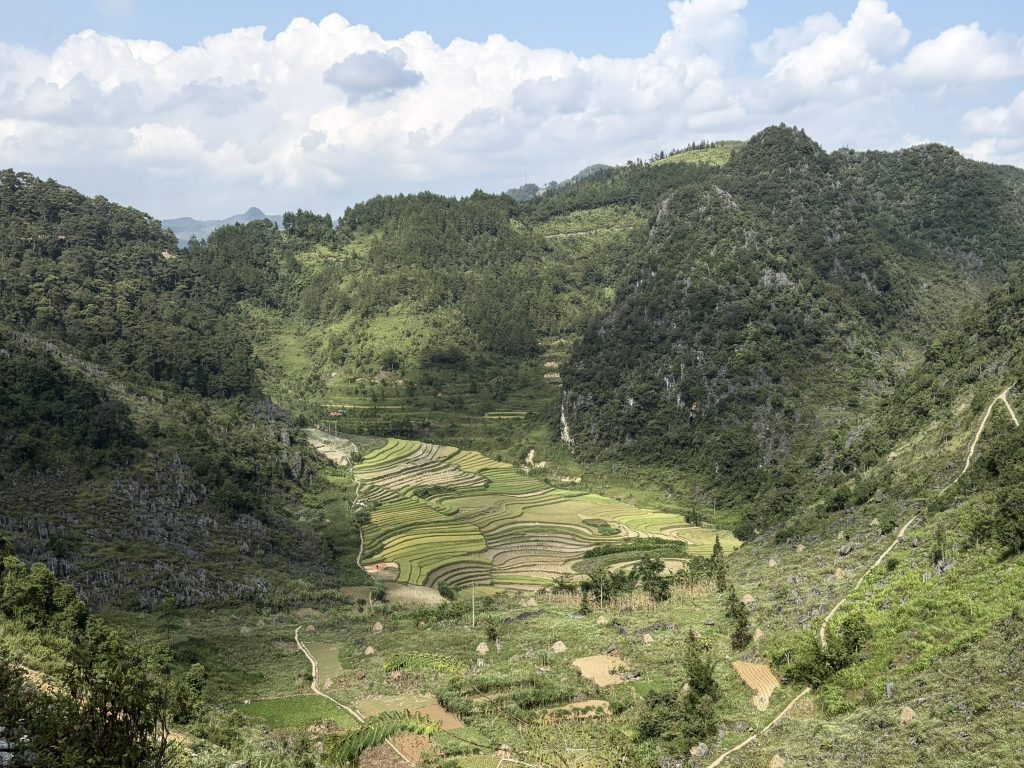
    The rices terraces of northern Vietnam from a viewpoint high above
    Rice terraces of the Ngoc Long Valley unfurling below

    How to Visit the Rice Terraces Respectfully

    This is still people’s farmland, so I’d treat the terraces accordingly.

    • Don’t walk through planted rice simply because you want a photograph
    • Don’t climb onto terrace walls if doing so could damage them
    • And if you’re photographing farmers, ask first

    I’ve seen enough people pointing cameras at people working to know that it’s easy to forget you’re photographing someone’s workplace rather than a tourist attraction.

    If you want to understand the terraces properly, I’d also consider staying in a local homestay or using a local guide where appropriate. 

    Community-based tourism can put money directly into villages and gives you a much better chance of understanding the landscape beyond the viewpoint.

    Most importantly, remember that the rice terraces don’t exist for tourists. We’re visitors in a landscape that people depend on for their livelihoods.

    A lot of this comes down to understanding that you’re visiting people’s homes and workplaces, something I also talk about in 23 things I wish I knew before travelling Vietnam. 

    FAQs About the Rice Terraces of Northern Vietnam

    Why are rice fields terraced in Northern Vietnam?

    The mountains are too steep for conventional wet-rice farming. Terracing creates relatively level fields that can retain and manage water while making steep slopes usable for agriculture.

    How are rice terraces made?

    Farmers cut and level sections of the mountainside, create retaining banks from materials such as earth and stone, and build irrigation systems to move water through the terraces. The terraces then require ongoing maintenance.

    Who farms the rice terraces?

    Different ethnic communities farm the terraces across Northern Vietnam, including H’Mong, Dao, Tay, Nung and La Chi communities, depending on the region. Farming work can be divided between men and women, with both involved in different stages of the process.

    When are the rice terraces golden?

    Generally, September and October are the best months for golden rice terraces in much of Northern Vietnam, although the exact timing varies by location and elevation.

    Where can I see the best rice terraces of Northern Vietnam?

    My personal picks are Hoang Su Phi and Xa Phin. Sapa is the easiest option for travellers, while Mu Cang Chai is one of the most dramatic and famous terrace landscapes.

    Can I see rice terraces outside September and October?

    Yes. The terraces look completely different throughout the agricultural year. During planting season they can be flooded and reflective, while the growing season turns them green.

    Can I walk through the rice terraces?

    Only where it is appropriate and permitted. Remember that the terraces are working farmland, so stick to established paths and don’t enter planted fields or climb terrace walls for photographs.

    Rice terraces below in a deep valley

    The rice terraces of Northern Vietnam are beautiful, but I think they’re far more interesting once you understand what you’re actually looking at.

    They’re working farmland, shaped and maintained by generations of people who have figured out how to grow food on steep mountainsides. 

    Once you see the planting, the harvesting, the drying, and all the work that happens between those stages, the terraces stop looking like scenery and start looking like what they really are: a living agricultural landscape.

    Hoang Su Phi is where I’d go first. Xa Phin is the place I’d tell a friend about afterwards.

    And when you’re standing beside those terraces, take a minute to watch the people actually working them. That’s the part of the landscape you won’t see from a viewpoint.


    Roamwise by Leaf — Practical guides | Forgotten stories | Meaningful journeys
  • 23 Things I Wish I Knew Before Travelling Vietnam

    23 Things I Wish I Knew Before Travelling Vietnam

    I knew I was going to like Vietnam before I arrived. I didn’t realise quite how much I’d end up learning from being here.

    I’ve travelled through northern, central, and southern Vietnam, and one of the biggest things I’ve learned is that Vietnam isn’t one experience. The landscapes, food, weather, and pace of travel can feel completely different from one region to the next.

    I’ve also discovered things I wish I’d known before travelling in Vietnam, from visa requirements and mobile data to getting around the country and navigating Vietnamese etiquette.

    So, if you’re planning your first trip, these are the things I wish I knew before travelling Vietnam.

    The Practical Things To Know Before Travelling Vietnam

    Let’s start with the boring-but-important stuff. Get these sorted before you arrive and you can spend more time thinking about where you’re going to eat.

    1. Check Your Vietnam Visa And Passport

    Vietnam’s visa rules depend on your nationality, so don’t assume you need a visa — or assume you don’t.

    For British passport holders, Vietnam currently allows visa-free tourism for stays of up to 45 days. If you want to stay longer, Vietnam’s e-visa allows stays of up to 90 days, with single or multiple entry options. 

    The official Vietnamese Immigration Department confirms that e-visas can be valid for a maximum of 90 days.

    Your passport also needs to be valid for at least six months from the date you arrive in Vietnam, with at least two blank pages, and it must not be damaged. You need to enter and leave Vietnam using the same passport.

    If you’re travelling for several months, this is worth knowing before you start planning your route. I wouldn’t leave the Vietnam tourist visa question until you’re standing in an airport.

    💡 Roamwise Tip

    Always check the rules for your own nationality before travelling, as visa exemptions and requirements differ.

    👉 You can visit Vietnam’s official e-visa portal here.

    2. Get a SIM Card or eSIM

    Getting a SIM card with mobile data in Vietnam is ridiculously easy compared with some countries I’ve travelled through (India, I’m looking at you).

    Best SIM Card Or eSIM Options In Vietnam

    OptionTypeBest forMy take
    ViettelPhysical SIMTravelling throughout VietnamMy pick for rural and mountain areas
    VinaphonePhysical SIMCities and general travelI used this and had no major problems
    MobifonePhysical SIMGeneral travelAnother major Vietnamese network
    AiraloeSIMArriving with data already set upConvenient if your phone supports eSIM
    HolaflyeSIMHeavy data usersWorth comparing if you want an eSIM
    Trip.comeSIMBooking travel and data in one placeConvenient if you already use Trip.com

    I used the Vinaphone network, and it worked well enough for me, but if I were doing it again, I’d probably choose Viettel. I’ve found Viettel particularly useful when travelling away from the major cities and into more rural areas.

    Having data makes travelling around Vietnam considerably easier. Maps, translation, Grab, bus bookings, accommodation, and messaging people all become much less stressful when your phone actually works. 

    I’d sort it out early rather than relying entirely on hotel Wi-Fi. 

    3. You Need The Right Licence To Ride A Motorbike

    Vietnam is famous for motorbike travel, but having a driving licence from home does not automatically mean you are legally allowed to ride a motorbike in Vietnam.

    For British drivers, GOV.UK states that you need both your UK driving licence (with motorbike endorsement) and a 1968 International Driving Permit (IDP) with A and A1 categories stamped. You also need appropriate insurance.

    And there’s a difference between being able to physically ride a motorbike and being legally licensed and insured to ride one.

    I wouldn’t treat the latter as an optional technicality.

    Northern Vietnam’s mountain roads are not somewhere I’d recommend learning to ride a motorbike for the first time. 

    4. A Few Small Things I Always Carry

    After travelling around Vietnam, there are a few things I’d always put in my bag:

    • Tissues — because toilets don’t always have toilet paper.
    • Hand sanitiser — particularly useful when travelling rurally.
    • A light layer — buses love aggressive air conditioning.
    • Power bank — useful on long travel days.
    • Translation app — you’ll eventually need it.
    • Small VND notes — much easier for small purchases.
    • Digital copies of important documents — passport, visa, insurance, etc.

    One thing I’d recommend before setting off is working out what you can realistically expect to spend. I’ve put together a realistic Vietnam travel budget for 2026 covering everything from cheap eats and hostel beds to transport and the bigger experiences worth saving for.

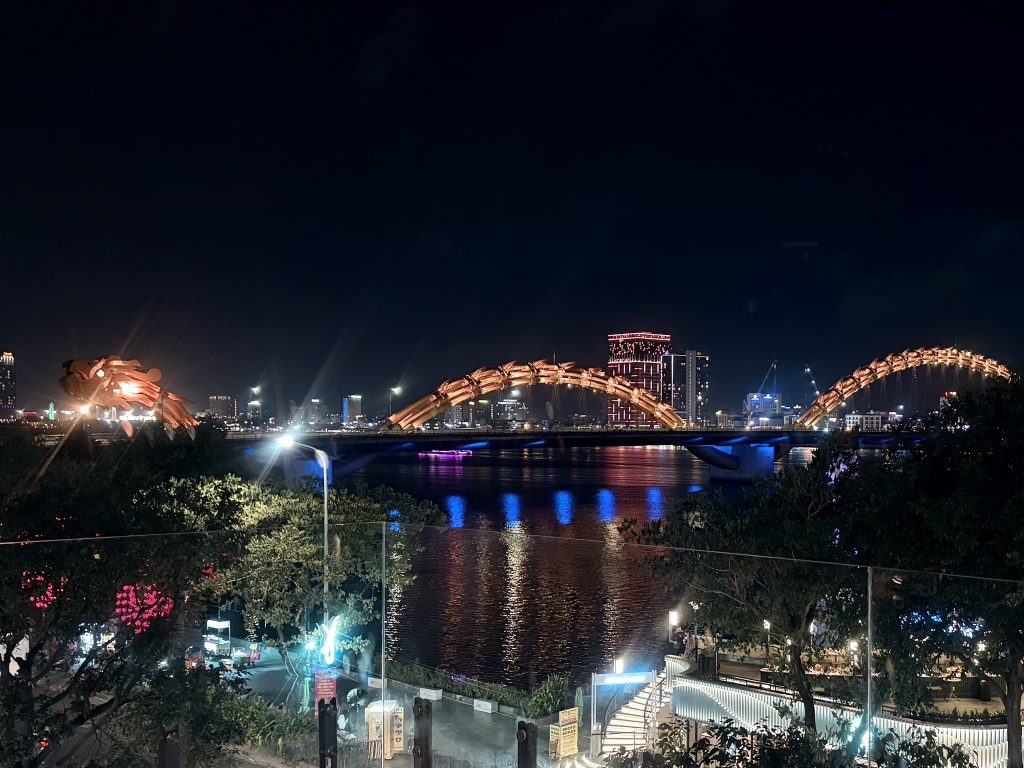
    A bridge in the shape of a dragon
    Vietnamese landscapes, food, weather, and pace of travel can feel completely different from one region to the next

    Getting Around Vietnam Is Easier Than I Expected

    One of the things I wish I’d known before travelling Vietnam is how many different ways there are to get around the country, from sleeper buses and trains to domestic flights and Grab.

    5. Vietnam Is Bigger Than It Looks

    This is probably one of the biggest things I wish I’d understood before travelling Vietnam.

    On a map the country looks relatively compact, but travelling from one end of the country to the other takes time.

    And the journey itself can be part of the experience.

    You have flights, trains, standard buses, sleeper buses, taxis, and motorbikes, and the best option depends massively on the route.

    I stopped thinking of travel time as wasted time fairly quickly. If I’m going somewhere overnight, I’ll happily take a sleeper bus and wake up somewhere completely different.

    Which brings me to one of my favourite discoveries…

    6. Sleeper Buses Are An Efficient Way to Travel

    I had heard all the usual stories about Vietnamese sleeper buses before I started using them.

    I still expected them to be horrible. They aren’t.

    At least, the good ones aren’t.

    Vietnamese sleeper buses have lie-down berths rather than normal upright seats, and many long-distance routes operate overnight. They can be a genuinely comfortable way to cover huge distances while also saving you a night of accommodation.

    Once I got used to them, I became a fan.

    There is something very satisfying about getting on a bus in the evening, lying down, sleeping for several hours, and arriving in another part of Vietnam the next morning.

    You do need to choose your bus carefully, though. Standards vary between operators, and I’d keep my passport, phone, wallet, and other valuables somewhere secure on my person, rather than tucked in a bag underneath my feet while I sleep.

    I’d also bring a layer. The air conditioning can be enthusiastic.

    7. Your Bus Might Be Late. That Doesn’t Mean You’ve Missed It.

    This was one of my favourite lessons in travelling around Vietnam.

    I learned that my bus will come when it comes. Just as long as I’m there waiting for it, it will generally come and get me.

    Vietnamese transport doesn’t always operate according to the exact timetable you might expect at home. Pick-up locations can also be a little confusing, particularly when a bus company gives you a general location rather than a beautifully signposted coach station.

    So I don’t like cutting things fine.

    I’d rather arrive early, find the pick-up point, and wait than spend the final ten minutes of my journey frantically wondering whether I’m standing beside the correct petrol station.

    💡 Roamwise Tip

    If you book through a hostel or hotel, the bus pick-up point tends to be from there, which can make things a lot easier.

    8. Trains Are Worth Considering

    Vietnam’s trains are slower than flying, but they’re a good option if you want to see more of the country or travel overnight.

    You can book seated carriages or beds in four-berth cabins, making overnight trains a surprisingly comfortable way to cover longer distances. 

    You get to see the scenery from ground level, too, which makes rail particularly appealing on some north-to-central and central-to-south routes.

    If speed matters most, fly.
    If price and convenience matter most, look at buses.
    If you want the journey to be part of the experience, I’d consider the train.

    💡 Roamwise Tip

    If you’re worried about sleeping on a train, I once got onboard in Hue, fell asleep at 7 pm, and woke up at 5 am when we pulled into Hanoi. Just saying, it might be more comfortable than you’re expecting…

    9. Grab Makes City Travel Very Easy

    In the bigger cities, I use Grab because it removes a lot of unnecessary faffing around.

    You can book cars and motorbikes through the app, see the price beforehand, pay with cash or card, and avoid the awkward process of trying to explain where you’re going when neither of you speaks much of the other’s language.

    One thing I do recommend at airports: book through the actual Grab app rather than accepting a random person offering to be your Grab driver.

    If someone approaches you claiming to be your driver, check that your booking is on their phone before getting in.

    💡 Roamwise Tip

    Xanh SM is another option for Vietnam taxi travel, and it can be a little cheaper, but it does require a Vietnamese phone number. 

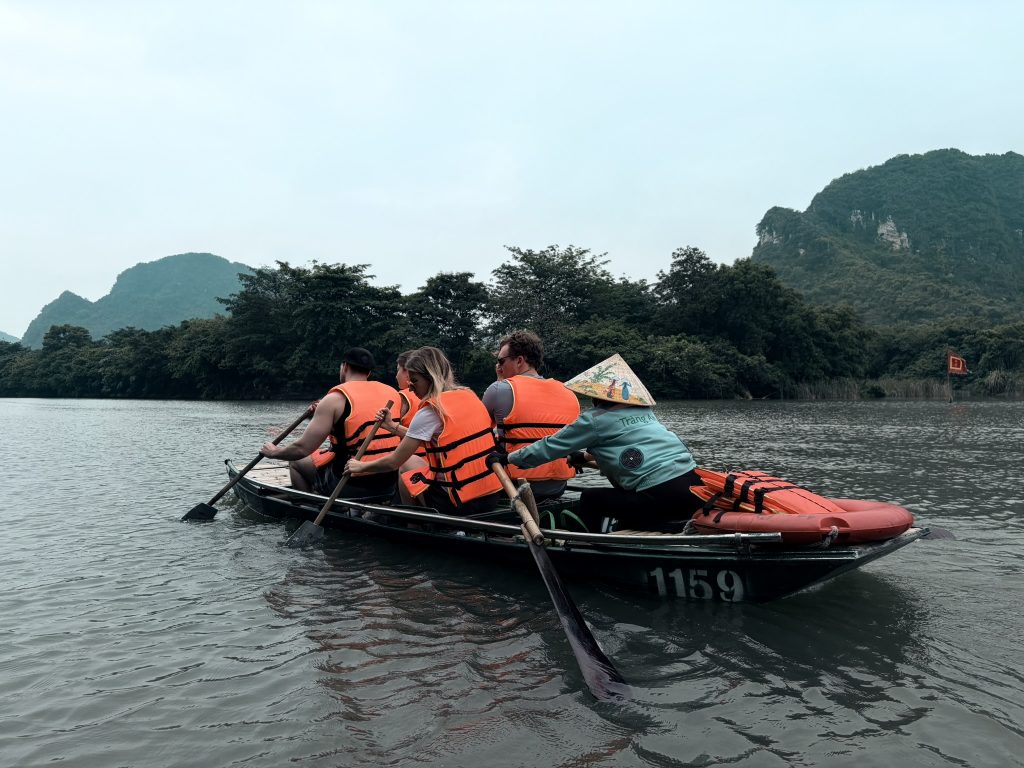
    A group of people in life jackets on a small sampan boat
    Getting around Vietnam is easier than I expected

    The Food Is One Of The Reasons I’d Go Back To Vietnam

    Food is one of the things I’d tell anyone travelling to Vietnam to look forward to, and there are a few things I wish I’d known before my first trip. 

    10. Vegetarian Food In Vietnam Is More Popular Than I Expected

    If you’re vegetarian, don’t assume travelling through Vietnam means surviving on rice and spring rolls.

    Vietnam has loads of vegetarian options.  

    You’ll see ‘chay’ used to indicate vegetarian food, and many Vietnamese dishes can be made without meat or fish.

    I’ve found Vietnamese food incredibly fresh and generally much lighter than some of the food I was used to eating while travelling elsewhere in Asia.

    And it’s very, very good.

    If you’re unsure about ingredients, learn the Vietnamese phrase: ‘tôi là người ăn chay’, ‘I’m vegetarian’, and keep a translation app handy.

    💡 Roamwise Tip

    I heard lots of stories before travelling Vietnam, about accidentally being served cat or dog. You won’t. Unless you deliberately seek it out, it’s not something you need to worry about.  You can have an incredible food experience in Vietnam without eating anything unusual at all.

    11. Vietnamese Coffee Is Addictive

    Vietnamese coffee is strong, sweet, and completely addictive.

    You’ve got cà phê sữa đá, egg coffee, coconut coffee, salted coffee, and plenty of variations depending on where you are.

    I came to Vietnam liking coffee and left with considerably higher standards.

    If you’re travelling through Hanoi, egg coffee is one of those things I’d actively seek out rather than treating it as a tourist gimmick.

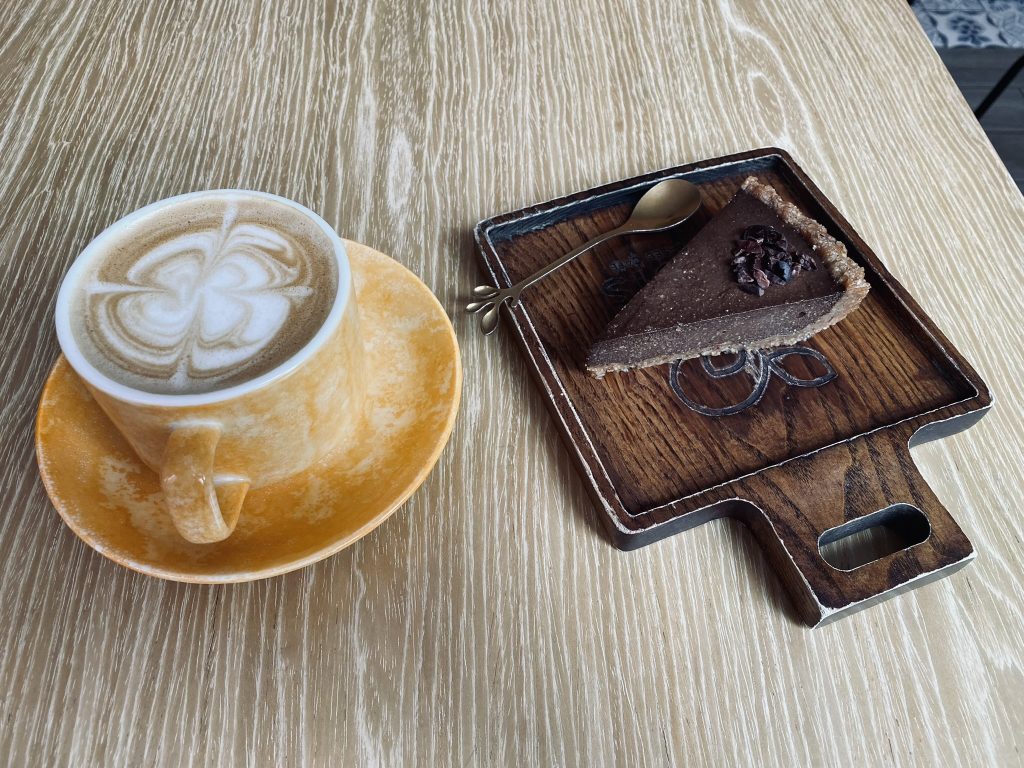
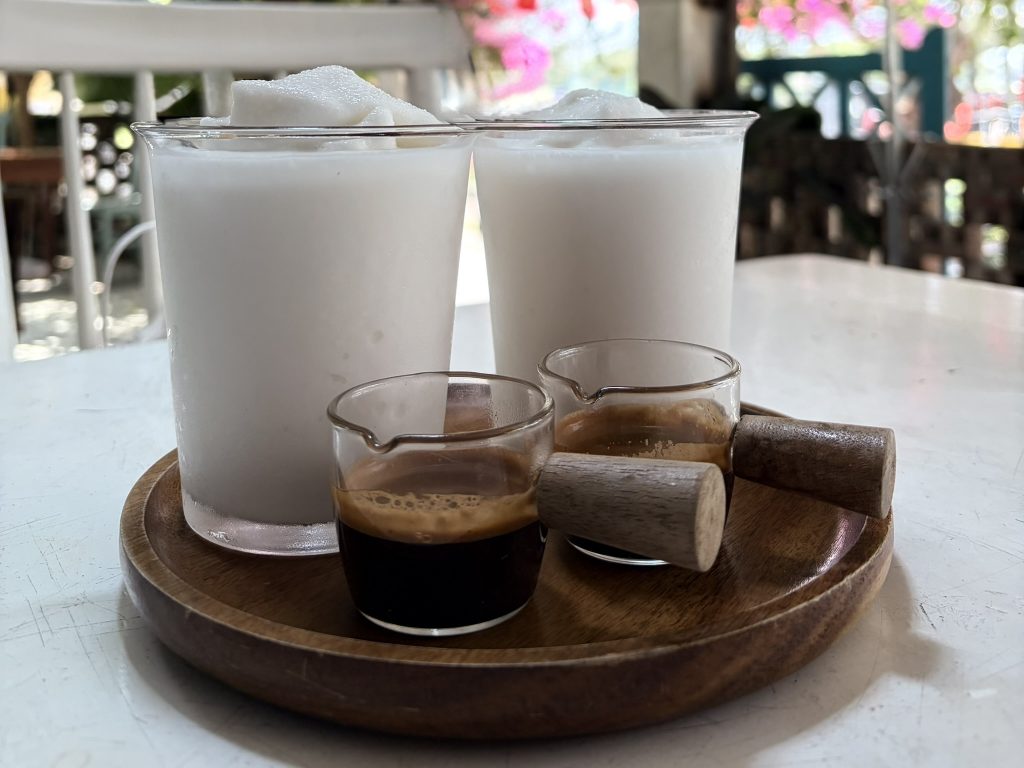
    Coffee and cake on a wooden table
    Vietnamese coffee is addictive

    Vietnamese People And Culture Will Shape Your Experience

    Nothing you can read before travelling Vietnam will fully prepare you for the people you’ll meet. I’ve found that getting to know Vietnamese people and understanding a little about the culture has shaped my experience of the country as much as any itinerary ever could. 

    12. Vietnamese People Are Friendly, Kind, and Curious

    This is the part I wish I could have known before arriving because no Vietnam planning guide can really prepare you for it.

    I’ve found Vietnamese people to be incredibly friendly, funny, resilient, and proud of their country.

    And I’ve learned that getting to know people changes your experience of Vietnam completely.

    I’ve had Vietnamese people go out of their way to help me simply because… they’re nice people.

    There’s a real sense of efficiency and resourcefulness that I’ve noticed repeatedly, too. Things might not always happen exactly as I’d expect them to, but somehow they usually get sorted.

    Vietnamese people are also curious about foreigners.

    If you make an effort to talk to people, don’t be surprised if you get asked where you’re from, how old you are, whether you’re married, what you do, if you want to eat rice with them, and approximately seventeen other questions you weren’t expecting five minutes into the conversation.

    I actually love this.

    13. English Is More Widely Spoken Than I Expected

    I wouldn’t arrive expecting everyone to speak English, particularly in rural areas. But I’ve found communication much easier than I expected. 

    In cities and tourist areas, English is widely used, and even when someone’s English isn’t strong, people will usually make a genuine effort to help.

    Sometimes that means Google Translate. Sometimes hand gestures. Sometimes three Vietnamese people stood around you laughing away trying to work out what you’re asking. 

    It might take a moment, but with a little patience, you’ll be understood eventually. 

    14. Learn A Few Vietnamese Words

    Vietnamese is hard and I’m not going to pretend otherwise.

    The tones alone can make you realise very quickly that confidently saying a Vietnamese word doesn’t necessarily mean you’ve said the Vietnamese word you thought you said.

    But Vietnamese people genuinely appreciate the effort.

    You don’t need to become fluent. I’d learn a few basics:

    • Xin chào — hello
    • Cảm ơn — thank you
    • Xin lỗi — sorry/excuse me
    • Bao nhiêu? — how much?
    • Không — no
    • Ngon — delicious
    • Chay — vegetarian

    Even attempting them is usually worth it.

    And if you completely butcher the pronunciation, at least you’ve probably made somebody smile.

    15. Vietnamese Etiquette Is Worth Knowing

    Vietnam is easy to navigate culturally, but there are a few small things worth knowing before you travel:

    • Take your shoes off when entering someone’s home, and follow the same rule at temples and religious sites where appropriate.
    • Don’t touch people’s heads, particularly if they’re older than you.
    • Don’t point directly at people, and always ask before taking someone’s photograph, especially in rural communities.
    • Don’t put money on the floor. It’s treated with respect, so hand it over rather than dropping or throwing it down.
    • Be aware of age. Age and hierarchy matter in Vietnamese culture, including how people address each other. You don’t need to memorise every Vietnamese pronoun — just be respectful and follow the lead of the people around you.

    None of this is difficult. Most of the time, paying attention to what locals do is the best guide.

    16. Vietnam Loves Football And Karaoke

    If you spend enough time around Vietnamese people, football and karaoke are going to become part of your life whether you planned for them or not.

    Vietnamese football is taken very seriously, and when there is a big match on, you’ll notice.

    Karaoke is similarly beloved.

    💡 Roamwise Tip: 

    Karaoke is very popular in Vietnam, but not every karaoke bar is quite as innocent as it sounds. Some are genuinely just rooms full of people enthusiastically singing badly. Others have a rather different reputation. If you’re looking for a karaoke night, choose your venue carefully. 

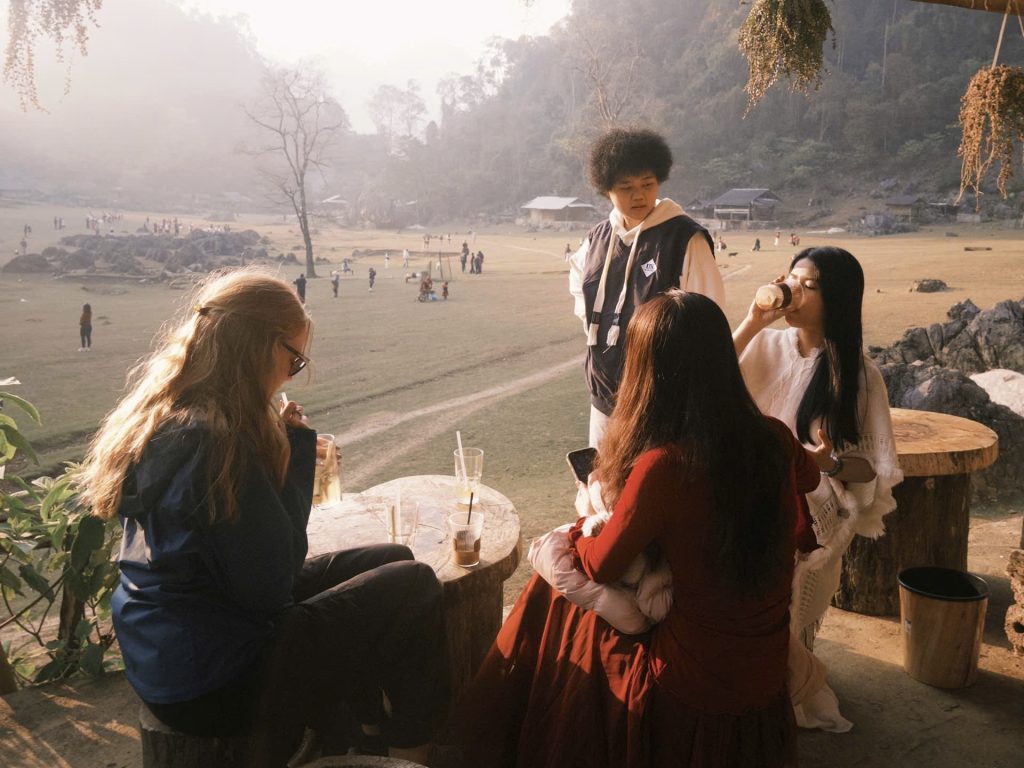
    Four people stand in the middle of a valley
    Vietnamese people and culture will shape your experience

    Vietnamese Festivals Are Worth Planning Around

    If you’re planning when to travel to Vietnam, it’s worth checking whether your dates coincide with one of the country’s major festivals. Some can add something genuinely special to a trip, while others require a little more planning. 

    17. Some Festivals Are Worth Timing Your Trip Around

    Vietnam has festivals and celebrations throughout the year, and if your dates line up, I’d absolutely consider planning your trip around one.

    I’ve found that festivals give you a very different experience of Vietnam because they’re not just something put on for tourists. They bring families, communities and entire neighbourhoods into the streets.

    Tết Trung Thu, Vietnam’s Mid-Autumn Festival, is a great example. You can see lanterns, lion dances and celebrations taking place in neighbourhoods across the country, and it’s particularly lovely if you’re travelling with children or simply want to experience a more community-focused side of Vietnam.

    National Day on 2 September is another time when you’ll notice a different atmosphere, with celebrations and flags appearing throughout the country.

    If your dates happen to line up, I’d take advantage of it rather than treating festivals as something you need to avoid.

    👉 You can read more about the history, traditions and legends behind Tết Trung Thu.

    18. Be Prepared For Things To Close During Tết

    However… Tết — Vietnamese New Year — is a different story if you’re trying to travel on a normal schedule.

    It’s the biggest holiday of the Vietnamese calendar, and while experiencing Tết can be fascinating, you should really plan to avoid it.

    Many businesses close, transport can become extremely busy, and accommodation and travel prices can increase around the holiday period. Some restaurants and shops operate with reduced opening hours or close completely as people return home to spend time with their families.

    💡 Roamwise Tip: 

    If you’re travelling during Tết, book important transport and accommodation well in advance and check opening arrangements rather than assuming everything will operate normally.

    If you’re not specifically travelling to experience Tết, I’d personally choose dates outside the main holiday period. It makes travelling around the country considerably easier.

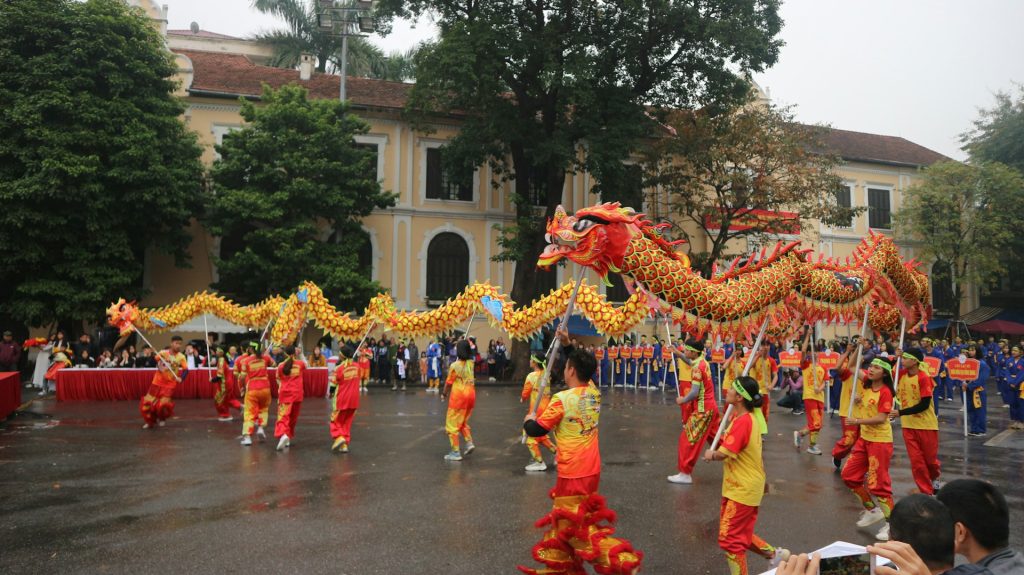
    A procession of lion dancers perform at a Vietnam Mid-Autumn Festival
    Vietnamese festivals are worth planning around

    A Few Things To Know Once You’re In Vietnam

    Some things are impossible to understand until you’re actually travelling around Vietnam. These are the little lessons I picked up once I was here. 

    19. Crossing The Road Is A Skill

    Crossing the road in Vietnam looks terrifying until you realise the trick is to walk steadily and commit.

    Don’t sprint, stop halfway, or suddenly change direction. Let the traffic anticipate where you’re going and move around you.

    Some pedestrians also raise a hand when crossing, which can help signal their intentions to drivers.

    It still takes a bit of getting used to, particularly in Hanoi Old Quarter and Ho Chi Minh City, but eventually you barely think about it.

    Just watch the traffic, take your time, and don’t assume anything is going to stop for you. 

    20. Vietnam Is Safer Than You Might Expect — But Don’t Switch Your Brain Off

    I feel comfortable travelling Vietnam, but I don’t treat it as somewhere where nothing can go wrong.

    Petty theft is the main thing I’d be mindful of, particularly in busy tourist areas and on crowded transport. On overnight buses and trains, I keep my passport, phone, wallet, and other valuables on my person rather than leaving them loose beside me while I sleep.

    I’d also never hand over my passport as a deposit for a motorbike. And if you’re riding yourself, road safety is a much bigger concern than petty theft. Traffic can be chaotic, particularly on mountain roads, so I’d only ride if you’re properly licensed, insured, and genuinely confident on a motorbike.

    So yes, I think Vietnam is an easy country to travel around. I just wouldn’t confuse easy with risk-free.

    21. Vietnam Doesn’t Have One Travel Season

    One thing I wish I’d realised before travelling Vietnam is that there isn’t one single travel season for the whole country.

    Vietnam stretches a long way from north to south, and the weather can be very different between regions. The north has cooler winters and more noticeable seasons, while central and southern Vietnam stay warmer for much of the year and have their own rainy periods.

    That means there isn’t really one “best time to visit Vietnam”. The best time depends on where you’re going and what you want to do.

    And this is something I think is particularly important if you’re travelling through the country rather than staying in one place. A month that gives you lovely weather in Hanoi might mean completely different conditions in Hoi An or Ho Chi Minh City.

    The mountains can be even more unpredictable. Weather can change quickly, particularly in northern Vietnam, and conditions can make a bigger difference to your plans when you’re travelling by motorbike or heading into rural areas.

    💡 Roamwise Tip:

    If you’re travelling through multiple regions, check the weather for each part of your route rather than searching for one “best” month to visit Vietnam.

    It’s also worth researching seasonal conditions before choosing when to visit northern Vietnam. For example, agricultural burning after the rice harvest can affect the appearance of rural landscapes and occasionally contribute to localised haze.

    22. North, Central Or South? They’re Almost Different Countries

    I didn’t really appreciate how different Northern, Central, and Southern Vietnam would feel until I’d travelled through them.

    • Northern Vietnam: mountains, rice terraces, cooler winters and more noticeable seasons.
    • Central Vietnam: history, beaches, caves and its own distinct rainy periods.
    • Southern Vietnam: hotter, more tropical and less affected by the seasonal changes you’ll notice in the north.

    So when you’re planning a Vietnam itinerary, think about the country as three very different regions rather than one long stretch of road.

    If you’ve only got a week or two, I’d pick one region. 

    If you’re heading to northern Vietnam, I’d also recommend learning a little about the story of Ha Giang before you go.

    23. There Is More To Vietnam Than The Backpacker Route

    Speaking of Vietnamese itineraries… I wish I’d realised earlier that I didn’t have to travel Vietnam the way everyone else does.

    There’s absolutely nothing wrong with the classic route — Hanoi, Ha Long Bay, Ninh Binh, Da Nang, Hoi An, and Ho Chi Minh City are popular for good reason. 

    If you’re not sure where to start, I’ve put together my classic Vietnam route and some alternative options. 

    But the more of Vietnam I’ve seen, the more I’ve wanted to get beyond the obvious stops. The countryside is some of the most beautiful I’ve ever seen, and Northern Vietnam in particular completely changed what I wanted from travelling here.

    You don’t have to skip the famous places. Just don’t assume they’re the whole country.

    A Vietnamese landscape with terraced green rice fields and blue skies
    Vietnam’s weather can be very different between regions

    FAQs Before Travelling Vietnam

    Still wondering what you need to know before travelling to Vietnam? These are some of the questions I think are most useful to answer before you book your trip. 

    Do I need a visa to travel to Vietnam?

    It depends on your nationality. British passport holders can currently visit Vietnam visa-free for up to 45 days, while Vietnam’s e-visa can allow stays of up to 90 days with single or multiple entry. Always check the current rules for your nationality before travelling.

    How long can you stay in Vietnam?

    For travellers using an e-visa, the maximum validity is currently 90 days. Some nationalities also have visa exemptions for shorter stays.

    Is Vietnam easy to travel around?

    Yes. I find Vietnam relatively straightforward for independent travel, particularly because of the extensive bus network, trains, domestic flights, Grab, and easy access to mobile data.

    The trick is accepting that transport doesn’t always run exactly to the timetable you might expect.

    Is Vietnam safe for tourists?

    I feel comfortable travelling around Vietnam, but normal precautions still apply. Keep valuables secure, be particularly careful on overnight transport, and take road safety seriously. If you’re driving, make sure you’re legally licensed and properly insured.

    A temple in Hue, Vietnam
    Always check the current rules for your nationality before travelling Vietnam

    My Biggest Lesson From Travelling Vietnam

    If there’s one thing I wish I’d known before travelling Vietnam, it’s that you don’t need to have everything figured out before you arrive.

    Know the important stuff: check your visa, sort your travel insurance, get some mobile data, and have a rough idea of where you’re going.

    After that, leave some room.

    Vietnam is easy to travel around, but I think it’s even better when you stop trying to control every minute of it.

    Plan enough to make the trip easy. Leave enough room for Vietnam to surprise you.


    Roamwise by Leaf — Practical guides | Forgotten stories | Meaningful journeys
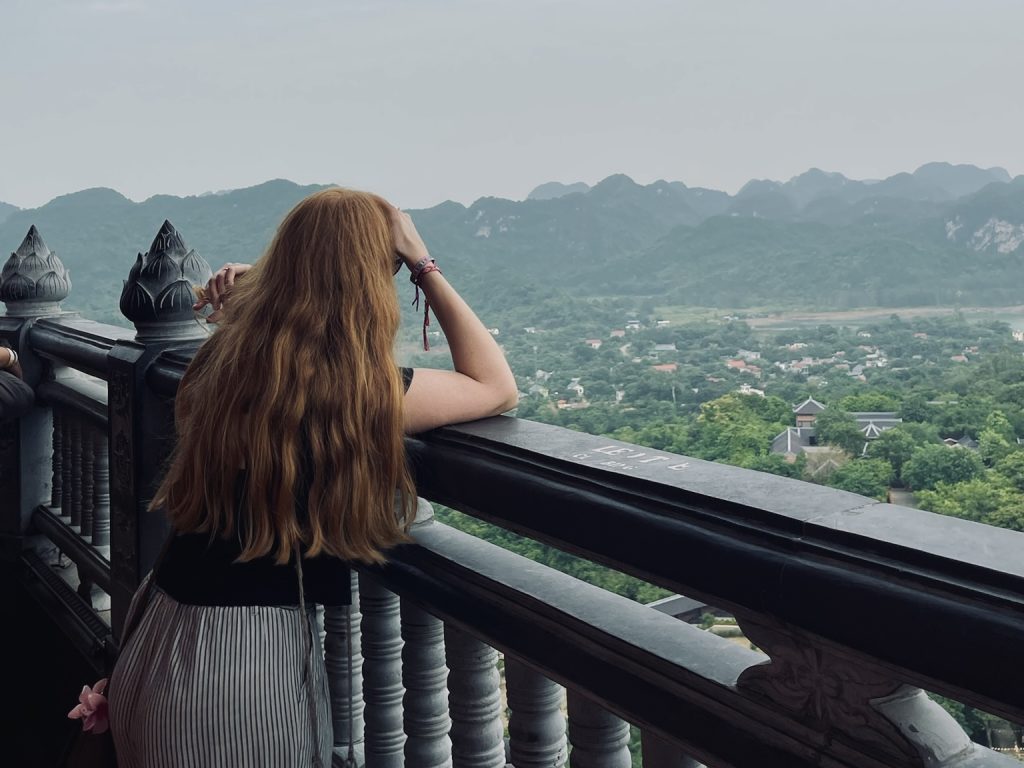
  • Northern Vietnam Travel Guide: Where to Go & How to Plan Your Trip

    Northern Vietnam Travel Guide: Where to Go & How to Plan Your Trip

    Northern Vietnam is the part of the country I’d recommend if you want a trip that combines cities, incredible food, mountains, rice terraces, islands, and a bit of adventure.

    I’ve travelled around the north several times, and one thing I’ve learned is that there is far too much to fit into one trip. You could spend weeks exploring the mountains alone, never mind adding Hanoi, Ninh Binh, and the coast.

    So rather than giving you a list of every destination you could possibly visit, this Northern Vietnam travel guide focuses on the places and experiences I’d actually prioritise, plus two different ways I’d plan a 14-day trip.

    The first is the classic Northern Vietnam route, which gives first-time visitors a good mix of the region’s biggest highlights.

    The second is for travellers who’d rather spend more time on mountain roads and less time following the usual tourist route.

    A winding road weaves between green mountains in Northern Vietnam
    Visit Northern Vietnam for the Scenery

    The Practicalities of Travelling in Northern Vietnam 

    Getting There

    For most international travellers, Hanoi is the obvious gateway to Northern Vietnam.

    Noi Bai International Airport has regular international and domestic connections, making Hanoi an easy starting point for a northern itinerary. 

    If you’re already travelling around Vietnam, Hanoi is also well connected by domestic flights, trains, and buses.

    💡 Roamwise Tip

    If you’re starting your trip in Hanoi, I’d spend some time simply wandering the Old Quarter before rushing off to the next stop. The streets have their own fascinating history, and I’ve written more about why Hanoi’s Old Quarter looks the way it does.

    Getting Around

    Northern Vietnam is relatively easy to travel around, but don’t underestimate the distances once you head into the mountains.

    Sleeper buses and limousine vans are useful for popular routes between Hanoi and destinations such as Ninh Binh and Sapa. Trains are another option, particularly for reaching Lao Cai before continuing to Sapa.

    For mountain destinations such as Ha Giang and Cao Bang, private cars, organised tours, and local drivers can make life considerably easier.

    And then there’s the motorbike.

    If you’re an experienced rider with the appropriate licence and insurance, travelling by motorbike can be an incredible way to see Northern Vietnam. 

    If you’re not, don’t treat the Ha Giang Loop as your motorbike training course. An Easy Rider (local driver) gives you the experience without putting you in charge of navigating mountain roads.

    When Should You Visit Northern Vietnam?

    March–April and September–November are two of my favourite periods for a Northern Vietnam trip.

    Spring generally brings comfortable temperatures and green landscapes, while September and October are particularly good if you want to see golden rice terraces. 

    May to August is hotter, wetter and more humid, although the countryside is beautifully green.

    December to February is cooler, particularly in the mountains. Sapa and other high-altitude destinations can be cold and misty, so pack accordingly.

    💡 Roamwise Tip

    The exact harvest period varies between destinations and from year to year, so check conditions for the specific area you’re visiting. 

    How Long Do You Need?

    I’d recommend at least 10 days for a first taste of Northern Vietnam, but 14 days gives you enough time to combine several different areas.

    If you have 21 days, even better—you’ll have much more flexibility and can explore beyond the classic route towards places such as Cao Bang, Hoang Su Phi, Ba Be, Mai Chau, Moc Chau, and Mu Cang Chai.

    If you only have a week, I’d stick to Hanoi, Ninh Binh, and the bay. But with two weeks, you can add Sapa or Ha Giang.

    Where Should You Stay?

    For Hanoi, I’d stay around the Old Quarter or Hoan Kiem Lake for a first visit.

    In Ninh Binh, I’d choose Tam Coc or Trang An rather than staying in the Ninh Binh city area.

    In Sapa, staying outside the centre gives you easier access to the countryside and trekking routes.

    For Ha Giang, your accommodation will largely depend on your chosen tour or route, with homestays being an important part of the experience.

    Is Northern Vietnam Expensive?

    Northern Vietnam can be very affordable, particularly for food, local accommodation, and everyday transport.

    Your budget can increase considerably once you add private cars, organised mountain tours, nicer hotels, or overnight cruises.

    I’d spend money where it improves the experience rather than automatically choosing the cheapest option. 

    A good Ha Giang guide or a decent bay cruise is worth paying more for; saving a few pounds on something that makes the entire experience miserable isn’t.

    What About Food?

    Eat everything you can. Northern Vietnam is brilliant for food, and there are plenty of vegetarian options too.

    Hanoi is particularly good for dishes such as pho, bun cha, banh cuon, cha ca, and egg coffee, and it’s one of the best places to eat your way around the region.

    If you don’t eat meat, you won’t be stuck for options either, particularly in Hanoi, where vegetarian restaurants and meat-free versions of Vietnamese dishes are easy to find.

    In rural areas, you’ll find fewer choices, but homestay meals are often one of the highlights of travelling through the mountains.

    As always, use your judgement with food and water. Stick to filtered or bottled water and be sensible about hygiene, particularly in remote areas.

    A cruise ship cuts through emerald waters with the classic Northern Vietnam karst landscape behind
    Getting from A to B in Northern Vietnam is never boring

    My 14-Day Northern Vietnam Itinerary

    If I were planning a first Northern Vietnam trip and wanted a good mixture of city, coast, mountains and countryside, this is the route I’d choose:

    DayWhereDayWhere
    1Hanoi / arrival8Ha Giang Loop
    2Hanoi9Ha Giang → Sapa
    3Ha Long Bay cruise → Cat Ba10Sapa
    4Cat Ba11Sapa
    5Cat Ba → Ha Giang12Sapa → Ninh Binh
    6Ha Giang Loop13Ninh Binh
    7Ha Giang Loop14Ninh Binh → Hanoi / departure

    This is a fairly full two weeks, so I’d make sure to check the current transport connections before booking non-refundable onward travel.

    For Day 3, I’d specifically look for a bay cruise or transfer arrangement that allows you to finish your Ha Long Bay experience and continue to Cat Ba, rather than assuming every day cruise connects directly with the island.

    But I like this route because you get a bit of everything:

    • Hanoi for food and culture
    • Ha Long Bay for the classic karst landscape
    • Cat Ba for island life
    • Ha Giang for the big mountain adventure
    • Sapa for trekking and rice terraces
    • Ninh Binh for countryside and limestone scenery

    If that’s the sort of trip you’re looking for, this would be my starting point.

    What to See & Do in Northern Vietnam

    Hanoi: Enjoy a Vietnamese coffee and get lost in the Old Quarter

    Hanoi is where I’d start.

    The obvious place to begin is the Old Quarter, where narrow streets, tiny restaurants, shops and an impressive number of motorbikes make simply walking around an experience.

    Don’t just tick off the sights. Eat.

    Try bun cha, pho and, yes, the famous egg coffee. I was sceptical about egg coffee before trying it, but it’s one of those Vietnamese specialities I’d now tell anyone visiting Hanoi to seek out.

    I’d also make time for:

    • Hoan Kiem Lake
    • Temple of Literature
    • Hoa Lo Prison
    • Imperial Citadel of Thang Long
    • Ho Chi Minh complex
    • A water puppet show
    • A rooftop bar
    • Hanoi’s street-food scene

    If you have time, head over to West Lake for a completely different side of the city.

    I’d allow 2 days.

    💡 Roamwise Tip

    Don’t fill every minute of Hanoi with sightseeing. Give yourself a few hours to wander without a plan. Some of the best food and cafés are found when you’re not following an itinerary. 

    Two coconut coffees are served on a platter on a table with pink flowers in the background
    Once you’ve tried Vietnamese Coffee you won’t be able to make it through a day of sightseeing without one!

    Ha Long Bay & Cat Ba: Take a Cruise, then Stay on the Island

    Ha Long Bay is famous for its dramatic islands rising from the water, and a boat trip is the obvious way to experience it.

    I’d choose an overnight cruise if your budget allows, but a day cruise can work if you’re short on time.

    For this itinerary, I’d take a Ha Long Bay day cruise and then continue to Cat Ba rather than returning immediately to Hanoi. 

    That gives you time to experience Cat Ba Island too.

    On Cat Ba, I’d:

    • Explore Cat Ba National Park
    • Kayak around Lan Ha Bay
    • Visit the beaches
    • Take a boat trip to see Viet Hai Village
    • Spend some time simply exploring the island

    Lan Ha Bay is particularly appealing if you’d like the limestone scenery without sticking entirely to the busiest Ha Long Bay routes.

    I’d allow 2 days, including the bay trip.

    Ha Giang: Take your time on the Loop

    If I had to choose one experience that really defines Northern Vietnam for me, it would be the Ha Giang Loop.

    This is the trip I’d choose if you’re more interested in mountains and adventure than ticking off traditional tourist attractions.

    The route takes you through some of the most spectacular landscapes in Vietnam, with highlights including Ma Pi Leng Pass, the Nho Que River, Dong Van and Meo Vac.

    I’d allow four days if you can. Three days is possible, but I think it feels rushed. Four gives you more time to actually enjoy the stops rather than spending the whole trip thinking about the next one. 

    Self-Riding or Easy Rider?

    This is one decision I’d take seriously.

    If you’re an experienced rider with the correct licence and insurance, self-riding gives you the most independence. 

    If you’re not, go with an Easy Rider.

    You can sit on the back, enjoy the scenery, and let someone who knows the roads concentrate on the corners.

    There is absolutely no prize for proving you can ride the Loop yourself.

    I’d allow 4 days.

    💡 Roamwise Tip

    Don’t judge the Ha Giang Loop solely by its famous viewpoints. Some of my favourite parts of the experience are the smaller roads, villages, and landscapes between the headline stops.

    Sapa: Trek the Rice Terraces

    Sapa is probably the most famous trekking destination in Northern Vietnam. And while the town itself can feel busy, the surrounding landscape is spectacular.

    I’d use Sapa as a base rather than spending your entire visit in the centre.

    One of the classic options is trekking through the Muong Hoa Valley, including villages such as Lao Chai and Ta Van.

    I’d recommend using a local guide if you’re doing a longer trek. They can choose a route suited to your fitness level, explain the area and make it much easier to explore beyond the obvious paths.

    A homestay is another experience I’d consider, particularly if you want to spend more time outside Sapa town.

    And then there’s Fansipan, often called the “Roof of Indochina”, because it is the highest mountain in Vietnam, at 3,143 metres.

    You can trek to the summit, which takes two days, or take the cable car. As someone who took the cable car, there’s no judgement from me on how you choose to summit.

    I’d allow 2–3 days.

    💡 Roamwise Tip

    If trekking is your main reason for visiting Sapa, prioritise the valleys and villages over spending too much time in the town itself.

    One thing worth knowing when planning your trip is that the rice harvest changes the appearance of the countryside considerably. I’ve put together a separate guide explaining when burning season happens in Vietnam and what to expect after the rice harvest.

    Ninh Binh: Take a Trang An Boat Trip

    Ninh Binh is one of the easiest destinations to add to a Northern Vietnam itinerary, and I’d absolutely include it.

    The landscape is the main attraction: towering limestone mountains, rivers, rice fields, and countryside.

    The Trang An boat trip is the obvious highlight. You’ll travel through caves and waterways surrounded by karst mountains, with temples and other stops along the route.

    I’d also climb Hang Mua for the view.

    It is a steep climb, but the panorama over the surrounding landscape makes the sweaty walk worthwhile.

    If you have time, hire a bicycle and explore the countryside rather than jumping straight back onto a bus.

    I’d allow 1–2 days.

    💡 Roamwise Tip

    Stay around Tam Coc or Trang An, not Ninh Binh city. It puts you much closer to the scenery and makes cycling around the area much easier.

    A person stands on a rock jetting out over a ledge with their arms upstretched, the background is misty Northern Vietnam scenery
    Do the Ha Giang Loop 4 days 3 nights to visit the Ma Pi Leng Sky Path

    Want a More Adventurous Northern Vietnam Route?

    The itinerary above is the route I’d recommend to someone visiting Northern Vietnam for the first time.

    But it isn’t the route I’d choose for everyone.

    If you’ve already visited Sapa and Ninh Binh, or you’d rather spend your holiday riding mountain roads and exploring quieter areas, I’d take a completely different route.

    My Alternative

    Hanoi → Mai Chau → Moc Chau or Ta Xua → Ha Giang → Cao Bang → Hanoi → Cat Ba → Ninh Binh → Hanoi

    This route is less about ticking off the most famous attractions and more about the journey itself.

    I’d particularly consider it if you:

    • Love road trips
    • Want more mountain scenery
    • Have already done the classic northern route
    • Prefer quieter destinations
    • Want to spend more time in rural areas

    Alternative Route Destinations

    Mai Chau: An Easy Introduction to Rural Northern Vietnam

    Mai Chau is a good option if you want rice fields, villages, and countryside without immediately committing to a multi-day mountain adventure.

    The valley is surrounded by green hills and is well suited to cycling, walking, and homestays.

    I’d use it as a gentle start to a longer northwest road trip.

    I’d allow 1–2 days.

    Moc Chau: Tea Plantations and Seasonal Landscapes

    Moc Chau offers something quite different from Ha Giang and Sapa.

    The area is known for tea plantations, farms, flowers, and strawberries, as well as a cooler climate, making it particularly interesting if you enjoy travelling according to the seasons. 

    I’d include it if you’re taking your time through the northwest rather than making a special trip there on a short first visit.

    I’d allow 1–2 days.

    Ta Xua: Go for the Mountain Views

    Ta Xua is another option for travellers who want to venture away from the most established Northern Vietnam routes.

    It’s particularly known for its dramatic mountain landscapes and cloud formations, and it works well as part of a northwest motorbike itinerary.

    I’d research the weather carefully before committing to it, though. Cloudy mountain destinations are slightly less impressive when the mountain is completely invisible.

    I’d allow 1–2 days.

    Cao Bang: Discover Ban Gioc Waterfall

    Cao Bang is where I’d head if I wanted to extend a Northern Vietnam mountain trip beyond Ha Giang.

    The main attraction is Ban Gioc Waterfall, but the province is worth more than a quick waterfall stop. I’d also visit Nguom Ngao Cave and God Eye Mountain.

    Cao Bang works particularly well as an extension to the Ha Giang Loop because, rather than completing the usual loop back to Ha Giang City, you can continue east from Meo Vac towards Bao Lac and into Cao Bang. 

    This gives you a chance to experience two of Northern Vietnam’s most spectacular mountain regions as one longer road trip.

    I’d allow 2–3 days for the Cao Bang section, depending on how much you want to see.

    💡 Roamwise Tip

    If you’re travelling overland from Ha Giang, I’d treat the journey as part of the adventure rather than simply a transfer.  

    A huge waterfall separating Northern Vietnam and China tumbles into a still pond with greenery around
    Visit Ban Gioc Waterfall in Cao Bang Province to see the Chinese-Vietnam border up close and personal!

    If You Have Even More Time

    If you’ve got three weeks or more, I’d start looking beyond these two routes.

    Hoang Su Phi

    One of my first choices if rice terraces are your priority and you’d like somewhere quieter than Sapa.

    Ba Be

    Ideal for slowing things down with a lake, forest, boat trips, and welcoming homestays.

    Mu Cang Chai

    One of the best places to look at if you’re travelling specifically for spectacular rice terraces, particularly around the flooded and harvest seasons. 

    September and October are generally the key months for golden terraces here. 

    Pu Luong

    A good choice for trekking and rural scenery without travelling as far north as Ha Giang.

    💡 Roamwise Tip

    You don’t need to add all four. In fact, please don’t. Pick the one that actually interests you.

    Which Northern Vietnam route should you choose?

    RouteBest for
    Classic routeFirst-time visitors who want a bit of everything
    Mountain routeRoad trips, mountains, and quieter destinations
    Northwest routeRice terraces, trekking, and rural landscapes
    Ha Giang + Cao BangAdventure and dramatic scenery
    Hanoi + Ninh Binh + BayShort trips and easier travel

    If you only have a week, I wouldn’t try to recreate the 14-day itinerary. I’d simplify it.

    If you have three weeks, don’t just add more destinations. Slow down the route you’ve already chosen.

    Planning your route is one thing, but it’s also worth working out how much you’ll need to spend. My guide to budgeting for a trip to Vietnam in 2026 breaks down realistic costs for accommodation, food, transport, tours, and longer trips.

    Northern Vietnam Travel Guide FAQs

    Is Northern Vietnam worth visiting?

    Yes. I’d particularly recommend it if you enjoy mountains, food, trekking, road trips, friendly locals, and rural landscapes.

    How many days do you need in Northern Vietnam?

    I’d allow at least 10 days, but 14 days gives you enough time to combine several different areas without rushing constantly.

    Is Sapa or Ha Giang better?

    Sapa is better for trekking and rice terraces, with easier access and more established tourism. Ha Giang is better for mountain passes and motorbike trips.

    Can you travel Northern Vietnam without a motorbike?

    Absolutely. Buses, trains, private cars, organised tours, and Easy Riders make the region accessible without riding yourself.

    When is the best time to visit Northern Vietnam?

    For a general trip, I’d look at March–April or September–November. For rice terraces, September–October is particularly popular, while May–June can offer beautiful flooded terraces.

    Is Northern Vietnam suitable for first-time visitors?

    Yes. Hanoi, Ninh Binh, Sapa, and the bay are relatively straightforward to combine. The more remote mountain regions require more planning but are very rewarding if you have the time.

    Can you do the Ha Giang Loop without riding yourself?

    Yes. An Easy Rider is a popular option if you want to experience the Loop without being responsible for navigating the motorbike yourself.

    Blue flowers take up the majority of the image but beyond them is rice fields and mountains
    The best time to visit Northern Vietnam is generally around March–April or September–November

    I don’t think there is one perfect Northern Vietnam itinerary.

    The route I’d recommend to a first-time visitor isn’t necessarily the route I’d choose for myself.

    That’s why I think the best way to plan Northern Vietnam is to start with what you actually want from the trip.

    If you want the classic combination of city, coast, mountains, and countryside, follow the first route.

    If you want winding mountain roads, smaller destinations, and fewer familiar stops, take the alternative.

    And if you’re lucky enough to have three weeks or more, slow down and explore beyond the usual Northern Vietnam itinerary.

    You don’t need to see everything. You just need to choose the places you actually want to see—and give yourself enough time to enjoy them.


    Roamwise by Leaf — Practical guides | Forgotten stories | Meaningful journeys