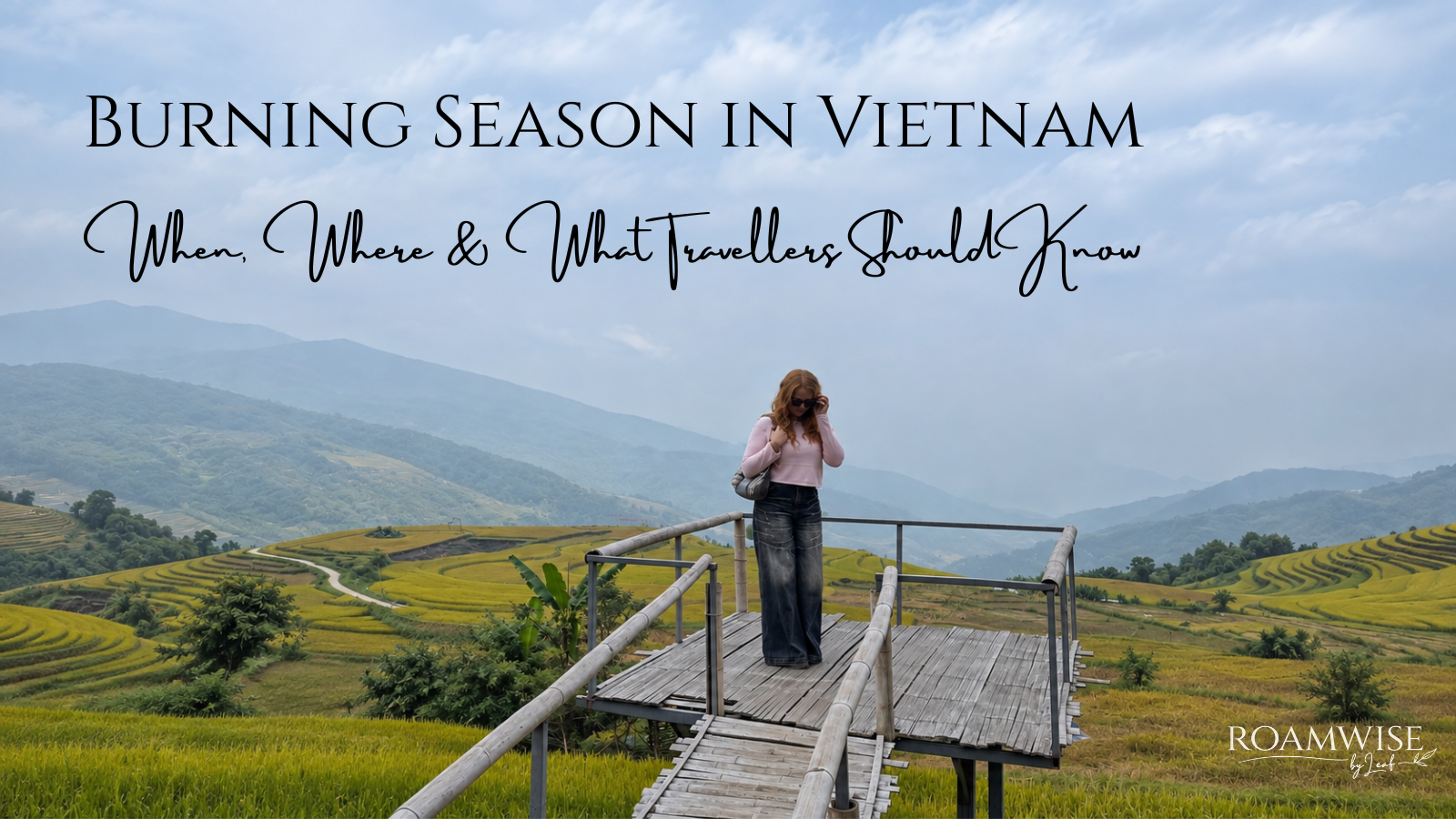
If you’ve travelled around Southeast Asia, you’ll probably have heard of burning season. It’s particularly notorious in northern Thailand, where agricultural fires can blanket entire regions in smoke. But what about the burning season in Vietnam?
It’s a question worth asking if you’re planning a trip through the northern mountains. Vietnam doesn’t experience the same widespread, predictable burning season as Thailand, but agricultural fires are still common in some rural areas.
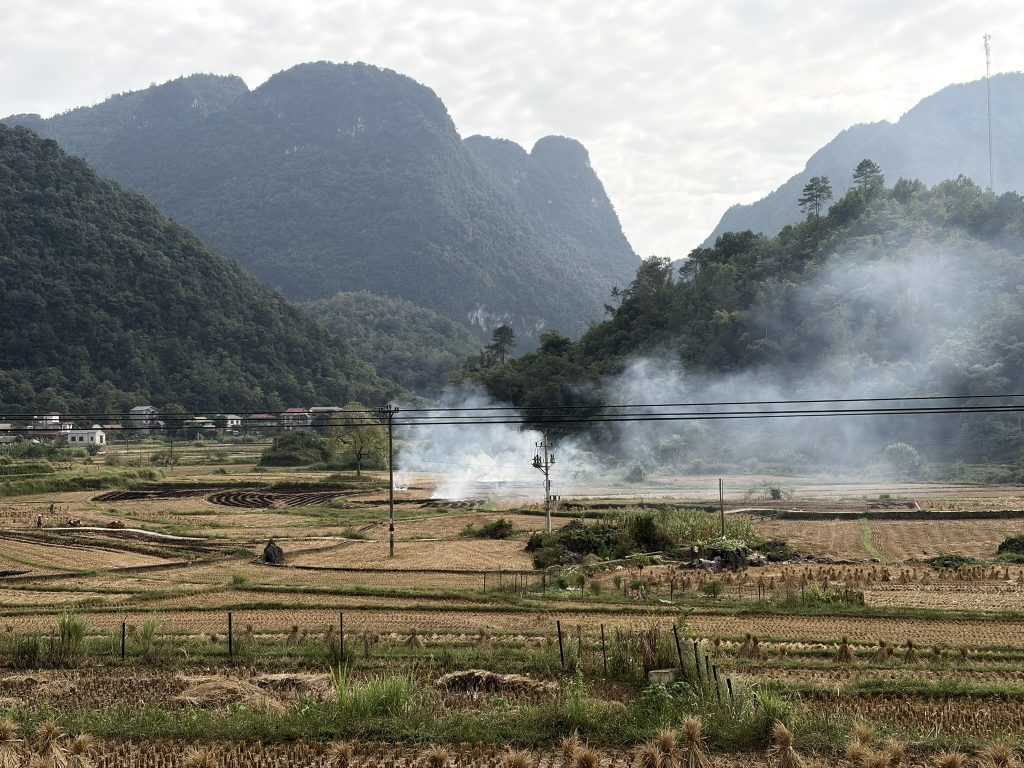
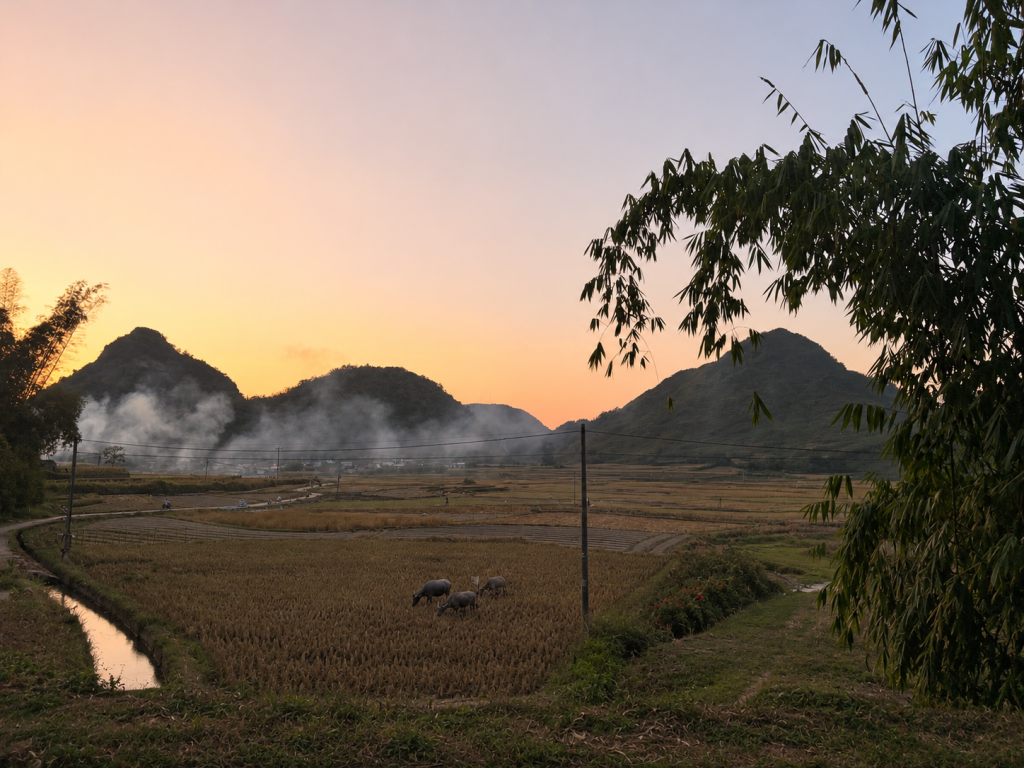
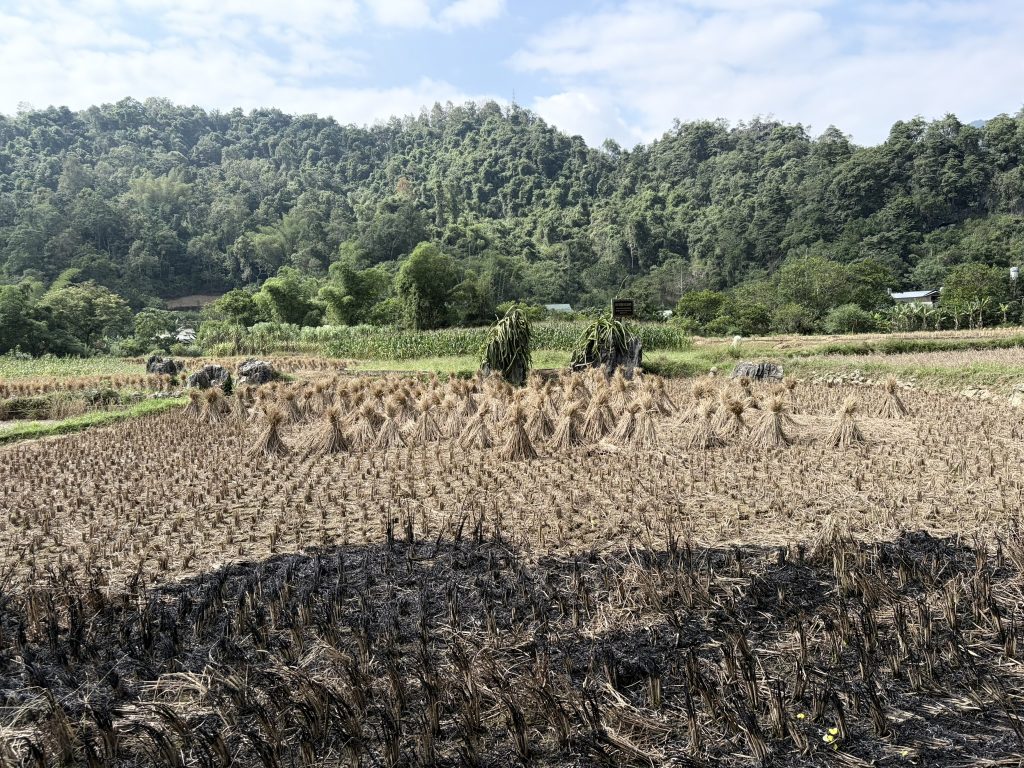
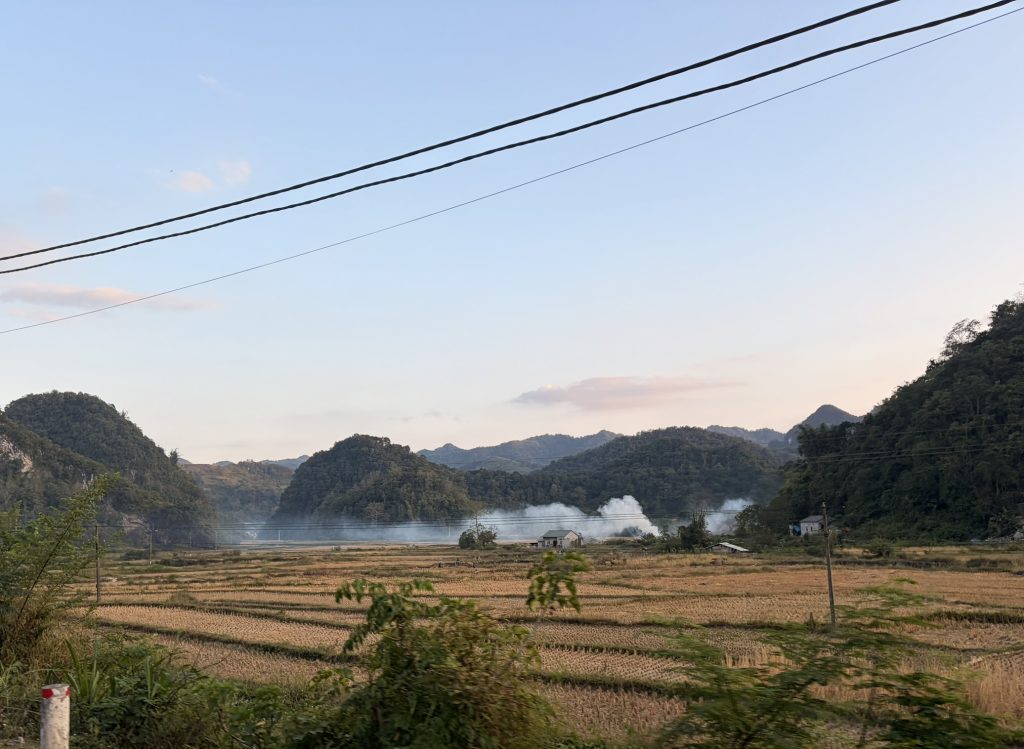
I noticed this myself in Cao Bang at the end of October 2026. There were fires burning in the rice fields, with blackened patches scattered across the countryside.
The timing of your visit can also make a big difference to the scenery. Arrive after the harvest and those familiar green or golden rice fields can look rather bare.
So, when do farmers burn their fields in northern Vietnam, where are you most likely to encounter it, and is it something you need to plan your trip around?
The Practicalities
Does Vietnam have a burning season? Not in the same widespread, predictable way as northern Thailand, but agricultural burning does take place after harvests.
When does it happen? Around rice harvests, which would be June in northern lowland areas and September–October in many mountain regions.
Where is it most noticeable? In rural farming areas across northern Vietnam, including parts of Ha Giang, Cao Bang, Sapa, and Hoang Su Phi.
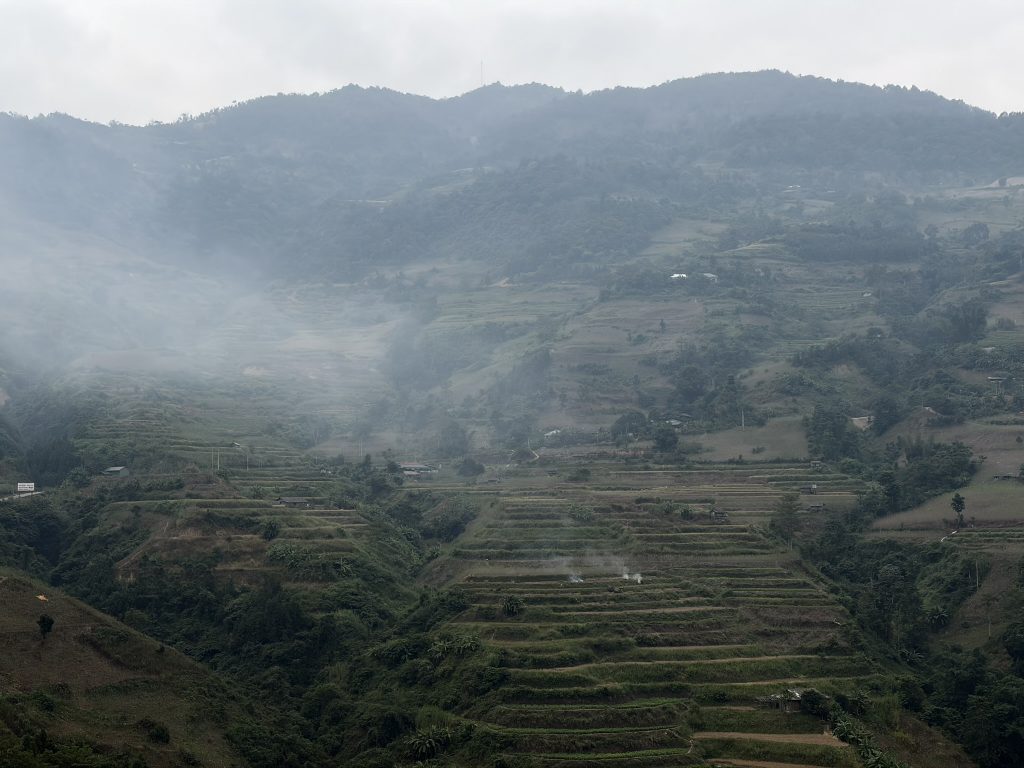
Will it affect visibility? It can. Smoke may linger over fields and valleys, particularly when weather conditions prevent it from dispersing. However, encountering a few agricultural fires doesn’t mean an entire region is covered in haze.
Should you avoid visiting? No. I wouldn’t change an entire itinerary because of the possibility of agricultural burning. Just be aware of local harvest periods and check air quality if conditions look particularly hazy.
Does Vietnam Have a Burning Season?
Vietnam doesn’t have one clearly defined nationwide burning season. Instead, agricultural burning tends to happen at different times throughout the year, depending on when farmers harvest their crops.
Rice-straw burning also takes place elsewhere in Vietnam, including the Mekong Delta. The difference is that there isn’t one nationwide calendar for it, as the timing depends on regional cropping patterns.
Research into rice-straw burning in northern Vietnam has identified two particularly relevant periods: around June and October, corresponding with the main rice harvests in the Red River Delta.
So, while you might encounter smoke in northern Vietnam, it’s better to think of it as seasonal agricultural burning rather than one big annual burning season.
The timing isn’t identical across the northern mountains, where altitude, local planting schedules, and weather all influence the harvest.
Why Do Farmers Burn Rice Fields After Harvest?
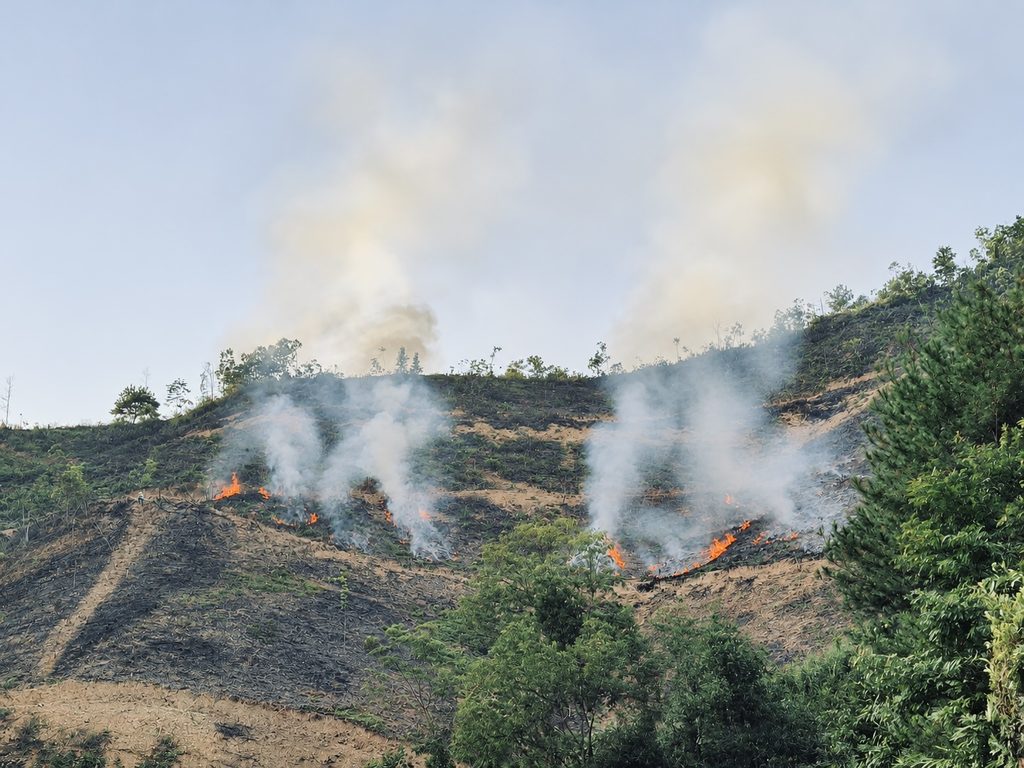
The fires you might see when travelling through northern Vietnam are often farmers clearing leftover rice crops.
Once the rice has been harvested, the fields are left with straw, stalks, and stubble. This material needs to be cleared before the next planting cycle.
There are several ways farmers can manage these leftovers:
- Burning: A quick way to clear dry rice straw and leftover vegetation from fields.
- Burning and incorporating ash: Some farmers burn leftover straw and then mix the ash into the soil. Ash contains minerals such as potassium, which can return some nutrients to the soil ahead of the next planting cycle.
- Collecting: Straw can be gathered and reused for animal feed, mushroom cultivation, and other purposes.
- Composting: Rice straw can be broken down with other organic material to create compost, which can then be added to the soil.
Burning is still practised in parts of Vietnam because it’s convenient and relatively inexpensive, particularly where collecting and transporting the leftover material isn’t practical.
It’s not necessarily a case of farmers deliberately setting fire to entire hillsides or forests. Often, you’re seeing small fires involving piles of leftover rice straw or vegetation in harvested fields.
Vietnam has introduced environmental regulations to encourage farmers to reuse agricultural waste rather than burn it.
The Environmental Protection Law prohibits open burning of crop by-products when it causes environmental pollution, while separate regulations provide penalties for burning near residential areas, airports, and major roads.
When Does Burning Season Happen in Northern Vietnam?
There isn’t a fixed calendar for agricultural burning, but understanding the rice harvest is the best way to anticipate when you might encounter it.
Northern Vietnam has two main rice-growing seasons in the lowlands, particularly around the Red River Delta.
The ethnic minority communities living in Vietnam’s northern mountains follow slightly different agricultural calendars, with many highland areas growing just one main rice crop each year.
Here’s a rough guide to the main harvest and burning periods:
| Period | Region | What to expect |
| May–June | Northern lowlands | Winter-spring rice harvest, followed by possible straw burning. Research around Hanoi identifies June as one of the main periods for rice-straw burning. |
| July–August | Lowlands and mountain regions | The second lowland rice crop is growing, while mountain terraces develop towards the autumn harvest. |
| Late August–September | Sapa and surrounding mountains | The main rice harvest begins, with terraces changing from golden to harvested and bare. |
| September–October | Hoang Su Phi, Ha Giang, and Cao Bang | Harvesting continues across many mountain areas, followed by possible burning of leftover crops. October is also a documented period of rice-straw burning around Hanoi. |
| November onwards | Northern mountain regions | Many fields have been harvested and left bare, although local agricultural burning can still occur. |
These are general patterns rather than guaranteed dates. Harvesting varies with the weather, altitude, and local farming practices, and the timing of burning isn’t necessarily the same as the harvest.
My Experience with Burning Season in Vietnam
I travelled through Ha Giang and into Cao Bang Province at the end of October 2026, and agricultural burning was something I noticed throughout the journey.
There were quite a few fires in the rice fields, with farmers burning leftover crops after harvesting. In some places, the fields were still being worked, while others had already been cleared and left with blackened patches across the ground.
It wasn’t quite what I had imagined when thinking about visiting northern Vietnam’s countryside.
The timing is worth considering if you’re planning a trip around the rice terraces. I’d originally associated the end of October with the tail end of the harvest season, but it also meant seeing plenty of fields after the rice had been cut.
This doesn’t mean the entire region was covered in smoke or that the journey was unpleasant. Rather, it was something that appeared intermittently along the route.
It’s also a reminder that the countryside is working farmland, not a landscape that’s maintained for visitors. Once the rice has been harvested, farmers have another crop cycle to prepare for.
If you’re visiting northern Vietnam in September or October, I’d expect the appearance of the fields to vary considerably depending on when you arrive.
Where Does Agricultural Burning Happen in Northern Vietnam?
Agricultural burning isn’t limited to one destination. If you’re travelling through northern Vietnam’s rural farming regions, you may encounter smoke from fields being cleared after the harvest.
Ha Giang
The Ha Giang Loop passes through plenty of rural communities and agricultural valleys, where rice farming remains an important part of local life. You may encounter recently harvested fields or evidence of burning, particularly towards the end of autumn.
There’s much more to the region than its famous mountain roads. I explore its history and how it became Vietnam’s northern frontier in the story of Ha Giang.
Cao Bang
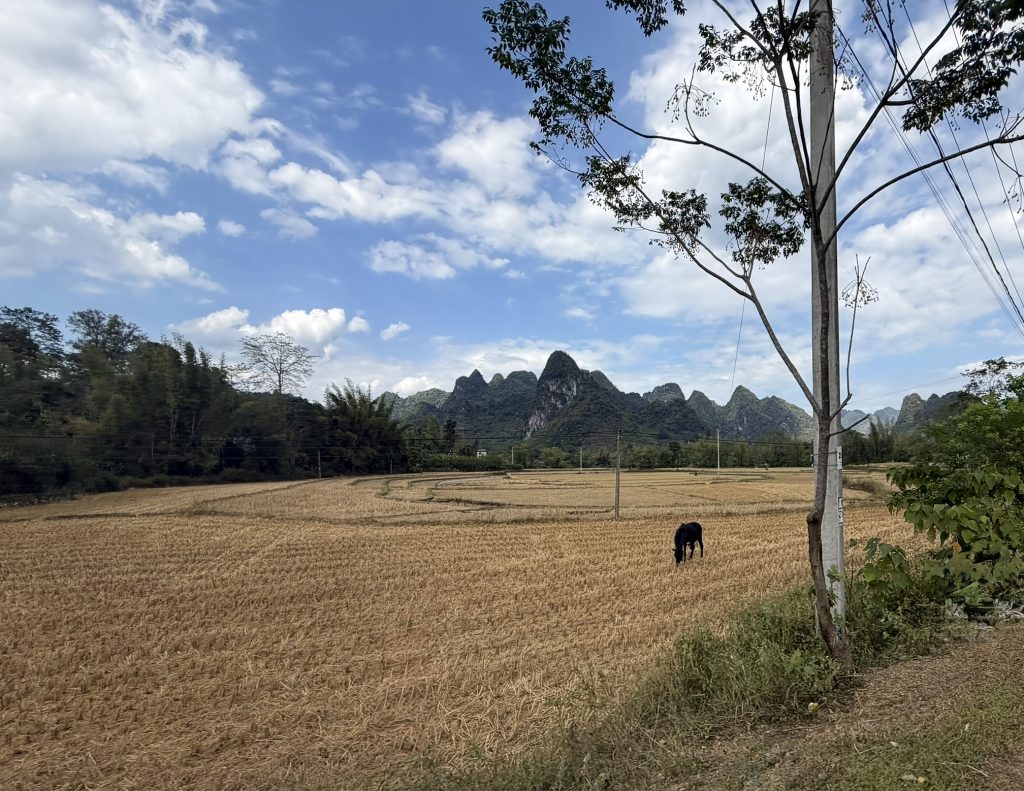
In Cao Bang, the rice-growing valleys around Phong Nam and Ngoc Con are particularly worth knowing about. These areas are known for their open fields and traditional farming landscapes, where agricultural burning can occur after the autumn harvest.
Sapa
Sapa is one of Vietnam’s best-known destinations for rice terraces. The Mường Hoa Valley, particularly around Lao Chai and Ta Van, is one of the most popular places to see them.
The terraces are usually golden around the main harvest in late August and September, making this one of the best times to visit if you want to see Sapa’s rice fields at their most colourful.
Hoang Su Phi
South-west of the main Ha Giang Loop route, Hoang Su Phi is another destination known for its dramatic terraced rice fields.
Its steep hillsides and traditional farming villages make it one of the most impressive places to see Vietnam’s rice-growing landscape.
The main harvest generally takes place in September and early October, making this the best time to visit if you want to see the terraces at their golden best.
What Do Northern Vietnam’s Rice Fields Look Like After Harvest?
Once the rice has been harvested, the golden stalks disappear, leaving behind short stubble and exposed soil. In some areas, farmers burn the remaining vegetation, creating blackened patches across the fields.
If you’re visiting in November or December, don’t expect the same golden terraces you’d see during the September harvest. The landscape looks different, but northern Vietnam’s mountains have plenty more to offer beyond rice fields.
If seeing golden terraces is a priority, I’d plan your trip around the harvest rather than simply choosing autumn.
Rice farming is a big part of life in the northern mountains. For a closer look at how the terraces are built, maintained and farmed, see my guide to the rice terraces of northern Vietnam.
Is Vietnam’s Burning Season as Bad as Thailand’s?
No. Northern Thailand has a much more widely recognised burning season, particularly around Chiang Mai, Pai, and Mae Hong Son.
This generally occurs during the hotter, drier months, with February to April often associated with particularly severe haze. Agricultural fires, forest fires and other pollution sources can combine to create prolonged periods of very poor air quality.
Vietnam is different.
While agricultural burning does happen, particularly around rice harvests, it doesn’t create the same predictable, widespread seasonal event across the entire north.
You might encounter smoke while travelling through rural farming areas, but that doesn’t mean every destination in northern Vietnam will be affected at the same time.
It’s also important to distinguish local agricultural smoke from other sources of air pollution.
Hanoi, for example, can experience poor air quality due to traffic, industrial emissions, construction dust, and regional pollution. This isn’t necessarily connected to farmers burning rice fields.
So, if you’ve been researching Thailand’s burning season and are worried about experiencing the same thing in Vietnam, it’s safe to say the two are not comparable.
Will Burning Season in Vietnam Affect Your Trip?
It can, but I’d separate two things: the visual experience and the air quality.
Reduced Visibility
Smoke from nearby agricultural fires can make the air look hazy, particularly when you’re travelling through valleys or rural areas.
This can occasionally affect visibility from viewpoints and mountain passes.
However, a few small fires in the fields don’t automatically mean you’ll experience widespread smog. The amount of smoke, wind, and weather conditions all make a difference.
Poor Air Quality
Burning rice straw releases fine particulate matter, including PM2.5, which can affect respiratory health.
Even if you can only see a little smoke, that doesn’t necessarily mean air quality is good.
If you’re travelling in northern Vietnam and notice persistent haze, it’s worth checking the local Air Quality Index (AQI). IQAir and other air-quality monitoring services provide readings for Vietnamese cities and other monitored locations.
If pollution levels are high, I’d avoid strenuous outdoor activities where possible, particularly if you have asthma or an existing respiratory condition.
An appropriately fitted particulate respirator, such as an N95 or FFP2, can help reduce exposure when air quality is poor.
For most travellers, though, the occasional agricultural fire isn’t something I’d let dictate an entire itinerary.
AQI monitoring coverage is more limited in remote mountain areas, so a reading from a nearby town won’t necessarily reflect conditions in the valley you’re travelling through.
How to Plan Your Northern Vietnam Trip Around Rice Harvesting
If you’re particularly interested in seeing the rice terraces, here’s what I’d consider:
- For golden rice terraces: Aim for September, particularly mid-to-late September in many mountain destinations. Some areas harvest earlier or later.
- For the Ha Giang Loop: September and early October can offer a good chance of seeing the rice fields before or during harvesting, depending on your route.
- For Cao Bang: September and October are generally the main rice harvest period in areas such as Phong Nam.
- For Sapa: Mid-to-late September is generally a good time to see the golden terraces.
- For Hoang Su Phi: Aim for late September, although different villages can reach harvest at slightly different times.
I’d also check recent local images on social media and updates before travelling. Rice harvests aren’t something you can predict perfectly months in advance, and the difference between visiting in early September and late October can be quite significant.
If you’re still preparing for your trip, I’ve also put together 23 things I wish I knew before travelling Vietnam, covering some of the practical details worth knowing before you arrive.
FAQs About Burning Season in Vietnam
Does Vietnam Have a Burning Season Like Thailand?
Not in the same way. Vietnam experiences agricultural burning after rice harvests, particularly in northern rural areas, but it doesn’t have the same widespread and predictable burning season associated with northern Thailand.
When Do Farmers Burn Rice Fields in Vietnam?
It depends on the region and harvest cycle. In northern Vietnam, agricultural burning can occur around June and September–October. The timing varies between lowland and mountain farming areas.
Is November a Bad Time to Visit Northern Vietnam?
No. November can be a good time to explore northern Vietnam, although many rice fields will have already been harvested.
Is the Ha Giang Loop Affected by Burning Season?
You can encounter agricultural burning along the Ha Giang Loop, particularly around the rice harvest in September and October. However, conditions vary, and it doesn’t mean the entire Loop will be affected by smoke.
Are the Rice Fields Still Green After Harvest?
Generally, no. Once farmers have harvested the rice, the fields are left with shorter stubble and exposed soil. Some farmers burn the leftover vegetation, which can leave blackened patches. If you want to see golden rice terraces, aim for September or early October in most northern mountain destinations.
Is Northern Vietnam Smoky in February and March?
It can be, but this isn’t necessarily because of local rice-field burning. Northern Vietnam can experience poor air quality during winter and early spring due to a combination of traffic, industrial emissions, weather conditions and regional pollution. Agricultural burning can also contribute to haze, depending on local activity.
Burning season in Vietnam isn’t something I’d plan an entire trip around, but it’s worth understanding before you visit. Agricultural fires are part of life in some rural farming areas, and the appearance of the rice fields can change considerably depending on when you arrive.
If seeing golden terraces is high on your list, try to plan as closely around the harvest as possible… rather than simply choosing autumn.
Otherwise, I’d still happily recommend exploring northern Vietnam outside the rice season. There’s far more to these mountains than the rice fields.
Roamwise by Leaf — Practical guides | Forgotten stories | Meaningful journeys