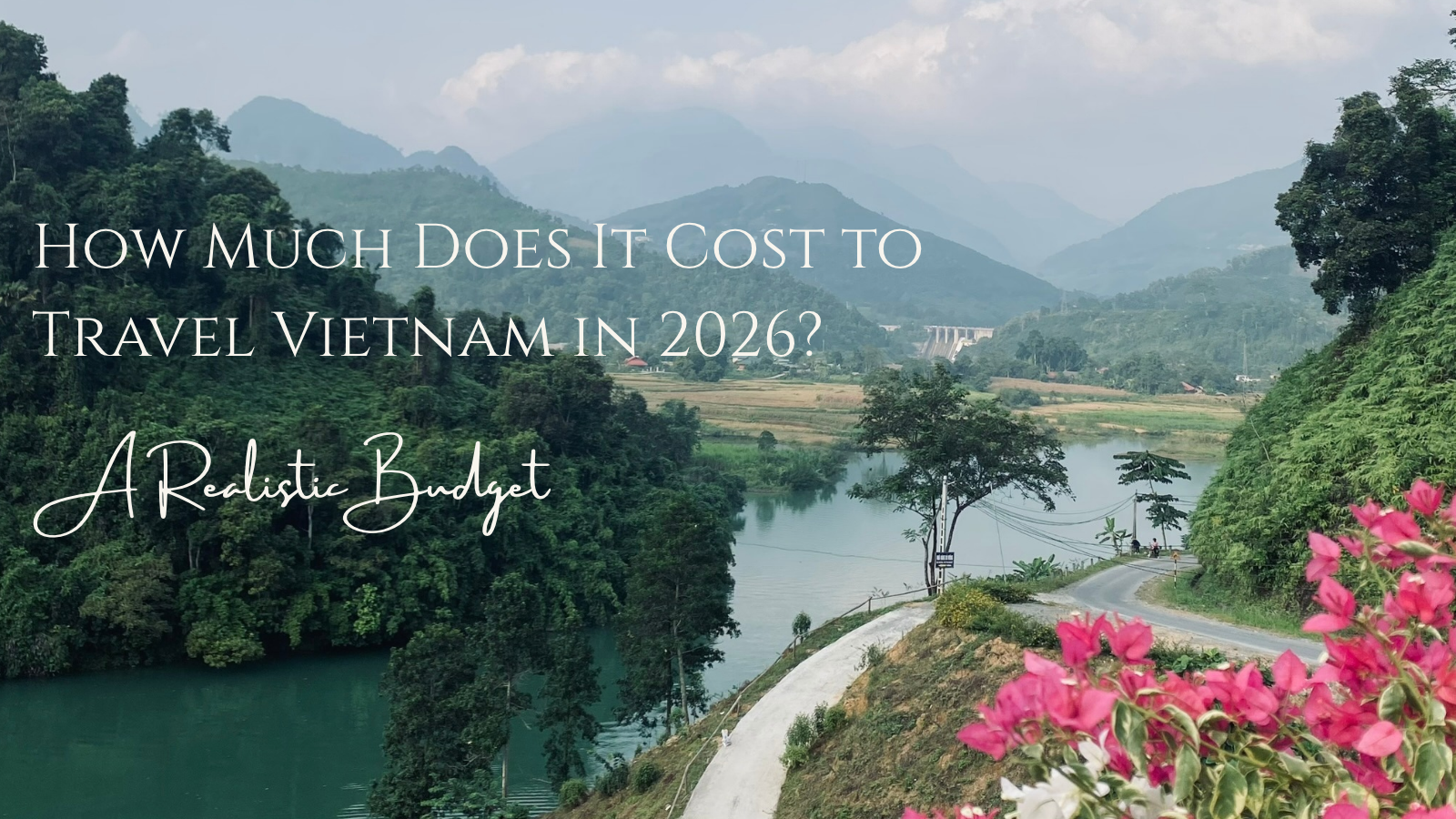
Vietnam is still an affordable country to explore, but I think some of the old advice about travelling around Vietnam on a budget of £10 a day needs a little updating.
If you are planning a trip to Vietnam in 2026, the good news is that you can still travel comfortably without spending a fortune. Dorm beds, street food, local buses, and Vietnamese coffees can keep your daily spending impressively low.
But if you want a private room, a few nice meals, some domestic flights, and the occasional experience you absolutely don’t want to miss, your budget will look rather different.
I travel on a budget, but I’m not interested in making a trip worse just to save a few pounds. If there’s an experience I know I’ll regret missing, I’ll pay for it. I’d rather plan for that expense than spend the trip worrying about every Vietnamese dong.
Here’s what I think a realistic Vietnam travel budget looks like in 2026, including what day-to-day travel costs, which expenses need their own allowance, and how I’d work out the cost of a three-week trip.
Vietnam Travel Budget: Daily Costs at a Glance
For a rough starting point, I’d budget the following per person, per day:
| Travel Style | Daily Budget | What I’d Expect |
| Backpacker | £20–30 | Hostel dorms, local food, budget transport, and mostly free or inexpensive activities |
| Comfortable Independent | £45–75 | Private rooms, a mixture of local food and restaurants, convenient transport, and some paid experiences |
| Comfortable With Fewer Compromises | £75–135 | Better hotels, more flights, nicer restaurants, and a greater choice of tours and activities |
| Luxury | £150+ | High-end hotels, private transport, fine dining, and premium tours |
These are planning estimates, not fixed prices.
The figures assume you’re travelling independently, with the backpacker budget based on dorm accommodation and the comfortable independent budget generally assuming a private room shared between two people. Travelling solo and booking private rooms will usually cost more per person.
The budgets cover accommodation, food, local transport, and modest everyday sightseeing. International flights and major experiences aren’t included, and I’d allow separately for longer intercity journeys if they’re a significant part of your route.
I’d use around £45–75 a day as a comfortable starting point. That gives you more flexibility than a strict backpacker budget without assuming you’ll be staying in boutique hotels and eating Western food at every opportunity.
If you’re still planning your route, my Northern Vietnam Travel Guide covers where to go and how to plan your time in the north.
Where Does Your Money Actually Go?
Rather than trying to give you an exact price for everything, here are the everyday costs I’d consider when planning a trip.
Accommodation Costs in Vietnam
Accommodation is one of the easiest parts of your Vietnam budget to control.
As a rough guide, I’d expect to pay:
| Type of Accommodation | Typical Price Per Night |
| Hostel dorm bed | £4–11 |
| Private budget guesthouse room | £11–23 |
| Comfortable hotel or boutique guesthouse | £23–45 |
| Higher-end hotel | £45–75+ |
These are broad estimates. Prices vary by destination, season, room standard, and how far ahead you book. Resort destinations and peak travel periods can push them considerably higher.
You can obviously spend much more than that, particularly in beach resorts. Luxury hotels can run into hundreds of pounds a night.
But I wouldn’t assume you need to.
Hostels Aren’t Just for Backpackers
I genuinely think staying in hostels is one of the best ways to travel around Vietnam, even if you’re not the stereotypical backpacker.
They’re brilliant for meeting people, particularly if you’re travelling solo, and the range has expanded far beyond rows of metal bunk beds and questionable bathrooms.
And don’t automatically assume a hostel means sharing a room.
Some have private rooms, which I think are particularly good for couples or friends who want to save money while still having their own space. You get the social side of a hostel without necessarily sleeping in a room with ten strangers.
For couples, this can make Vietnam particularly good value. A £30–40 private room becomes £15–20 per person when shared between two, and you can do the same with some taxis and private transfers.
There is no prize for choosing the hardest option.
Food and Drink Costs in Vietnam
Food is probably my favourite part of travelling Vietnam on a budget because eating cheaply doesn’t mean eating badly.
A bowl of phở, a bánh mì, or a local rice dish can cost only a couple of pounds. Many street-food meals fall roughly around 30,000–80,000 VND, depending on the dish and location.
For food, I’d roughly budget:
| Eating Style | Daily Food Budget |
| Mostly street food | £5–8 |
| Street food and local restaurants | £9–15 |
| A mixture of local and Western food | £15–27 |
| Restaurants with few compromises | £27–45+ |
These are estimates for food and drink, rather than a promise that every meal will fit the same budget.
The biggest jump usually comes when you start eating regularly in tourist-focused restaurants and cafés, and ordering Western food.
A local Vietnamese meal might cost a couple of pounds. A burger, pizza, fancy brunch, or cocktail in a trendy tourist area can suddenly turn lunch into a £25–30 affair.
That’s fine. Sometimes I want the pizza.
If you’re trying to keep costs down, though, eat Vietnamese food because you actually like it, rather than treating it as the punishment you endure to save money.
And don’t forget coffee. Vietnamese coffee is cheap enough that I’d happily build a daily coffee into my budget rather than pretending I won’t buy one.
How Much Does Transport Cost in Vietnam?
Getting around Vietnam can be cheap, but long distances and frequent stops can push up your transport costs.
If you’re travelling from Hanoi to Ho Chi Minh City, you aren’t popping down the road. Your route, the number of stops you make, and how you travel between destinations can all make a substantial difference to your total.
Getting Around Cities
Grab and Xanh SM are convenient options for getting around. Short taxi journeys can cost only a few pounds, and motorbike taxis are generally cheaper if you’re travelling light and comfortable riding as a passenger.
Local buses and metro systems are cheaper still, although I tend to use them when I know where I’m going rather than spending 25 minutes trying to decipher a Vietnamese route map.
Between Destinations
Sleeper buses and trains can be excellent value, particularly for shorter or overnight journeys. A sleeper bus can also save you a night’s accommodation, although I’d factor comfort and journey time into the decision.
For longer distances, I’d seriously consider flying. Domestic airlines sometimes offer low promotional fares, although the headline price isn’t necessarily the final cost once you add baggage and other extras.
That doesn’t mean you should fly everywhere.
If I have the time, I’d rather take a sleeper bus or train for some journeys and make the journey part of the trip. But if a long bus journey would cost me an entire day and a flight is reasonably priced, I’ll probably fly.
The budget is there to stop me going overboard every day, not to make me miserable for one very long bus ride.
The Experiences You Need to Budget For
This is where I’d pay particular attention when working out how much it costs to travel Vietnam.
Your everyday spending is only part of the picture. The bigger experiences can change the overall cost considerably.
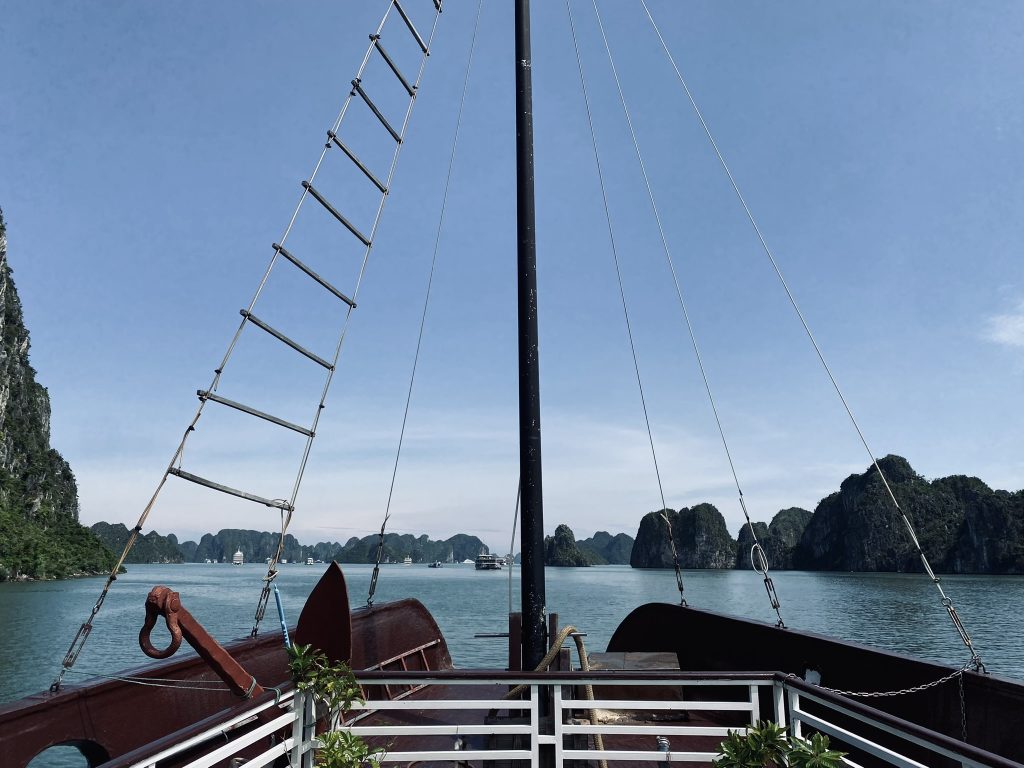
Think about the Ha Giang Loop, an overnight Ha Long Bay or Lan Ha Bay cruise, Sapa trekking, domestic flights, diving, cooking classes, and other organised tours.
But there’s an important distinction here.
Don’t simply add the headline price of a multi-day experience to every day’s normal spending.
For example, if you pay around $150 for a four-day Ha Giang Loop, that money is spread across four days and may already include three nights of accommodation, meals, transport or riding, and the actual Loop experience, depending on the tour.
So, sometimes these experiences are actually very good value because one price bundles together several expenses.
The important thing is to check exactly what’s included before comparing prices.
The Loop is about more than the road itself, too. If you’d like to understand more about the region you’re travelling through, read the story of Ha Giang and the history behind the Loop.
My Vietnam Travel Budget for Three Weeks
Let’s imagine a three-week trip covering northern, central, and southern Vietnam:
Hanoi (3 days) → Ha Giang (4 days) → Ninh Binh (3 days) → Da Nang (2 days) → Hoi An (3 days) → Da Lat (3 days) → Ho Chi Minh City (3 days)
That’s 21 days, with a mixture of cities, landscapes, and time to explore. Ordinary transport between destinations is included in these budgets, but I’d allow extra for major excursions.
Backpacker Budget: Around £500–750
I’d budget £500–750 for three weeks if I were travelling on a backpacker budget.
I’d expect to cover:
- Hostel dorm accommodation.
- Mostly local food.
- Buses, trains, and local transport.
- Everyday sightseeing, coffees, and laundry.
This is a proper budget trip, rather than a private-room-every-night holiday. You’ll need to be selective about paid activities, particularly the more expensive tours.
Comfortable Budget: Around £1,000–1,500
For a more comfortable trip, I’d budget £1,000–1,500 for three weeks.
That gives you room for:
- Affordable private rooms.
- A mixture of local food and Western-style restaurants and cafes.
- Convenient transport and the occasional domestic flight.
- A selection of paid activities and the odd treat.
Is £1,000 enough for three weeks in Vietnam? It can be, particularly if you share rooms and plan your spending. If you want several expensive experiences, multiple flights, and private rooms throughout, I’d budget more.
I’d rather work out what the trip I want will cost than set an arbitrary limit and spend the holiday worrying about every purchase.
If Hanoi is your first stop, my article on why Hanoi’s Old Quarter looks the way it does is a good read before you start exploring.
Where I’d Save on Costs — and Where I Wouldn’t
I don’t think the aim should be to spend as little as humanly possible. I’d save on things I’m not particularly bothered about and spend on the things I am.
For me, that might mean choosing a simple room because I’m out exploring all day, eating local food because it’s delicious, or taking a Grab bike instead of a car taxi when it’s convenient.
But I’d happily spend more on a Ha Giang Loop company I trust, a cruise I really want to do, a good guide, or a domestic flight that saves me an exhausting journey.
I’d also pay for a nicer room after several nights in dorms, or a really good (treat) meal when I fancy one.
Your priorities might be completely different. Perhaps you love a beautiful hotel but aren’t interested in organised tours. Perhaps food is the highlight of your trip, or you’d rather spend your money on diving.
That’s why I wouldn’t build a Vietnam budget around somebody else’s idea of what a good trip looks like.
Other Travelling Costs to Remember
Your daily budget won’t cover everything, so I’d keep a separate allowance for the less exciting expenses.
Visa
Visa requirements and fees depend on your nationality and the length of your stay. Some travellers can enter Vietnam without a visa for a limited period, while others need to apply and pay a fee in advance.
👉 Check the current eligibility rules, permitted stay, and fees on Vietnam’s official immigration website before travelling.
Travel Insurance
Particularly important if you’re planning motorbiking, trekking, or other activities. Check that your policy covers what you’re actually doing.
SIM or eSIM
You’ll want data for maps, Grab, translation, bookings, and keeping in touch. Compare the cost of a local SIM with an eSIM before you travel.
ATM Fees and Cash
I’d use a combination of a travel card and Vietnamese dong. Vietnam has plenty of places that accept cards, but cash is still useful for smaller businesses, markets, street food, and rural areas.
👉 Always have some smaller notes available rather than trying to pay for a 40,000 VND meal with a 500,000 VND note.
Laundry and Tips
Laundry isn’t glamorous, but it’s necessary if you’re travelling for several weeks. Tipping isn’t generally expected in Vietnam, but I always round up the bill for a coffee or a meal. I also keep a little aside for guides and particularly good service during excursions.
A Few Ways to Make Your Vietnam Travel Budget Go Further
A few practical choices can make a noticeable difference without turning your holiday into a constant hunt for the cheapest option.
- Stay longer in each place. Constantly moving means paying for transport, check-ins, taxis, and sometimes another tour every time you change destination.
- Use accommodation strategically. Mix dorms, private hostel rooms, and occasional hotels rather than assuming you need the same standard every night.
- Take overnight transport when it makes sense. A sleeper bus can save you a night’s accommodation as well as getting you to the next destination, provided you’re happy with the journey.
- Check what’s included in tours. Don’t panic when you see a $150 tour or cruise price. Work out what it covers before deciding how much extra to budget.
And don’t forget to allow for the things that matter to you.
There are plenty of other little things worth knowing before you arrive, too. I’ve shared them in my guide to 23 things I wish I knew before travelling Vietnam.
Vietnam Travel Budget FAQs
Is Vietnam Expensive to Travel in 2026?
Vietnam can still be a very affordable destination. I’d use around £20–30 a day for budget backpacking and £45–75 a day for comfortable independent travel as starting estimates, before international flights and major experiences.
Is a £1,000 Vietnam Travel Budget Enough for Three Weeks of Travelling?
It can be, depending on your accommodation, transport, and activities. You’ll need to keep a close eye on spending if you want private rooms throughout, several domestic flights, and expensive tours. Remember to account for what’s included in multi-day packages rather than adding the full price to your ordinary daily costs.
How Much Should I Budget for Food in Vietnam?
I’d allow around £5–8 a day for mostly street food, £9–15 for a mixture of local food and restaurants, and £15–30+ if you’re regularly eating Western food and in tourist-focused restaurants. Your actual spending will depend on where you eat and what you order.
How Much Should I Budget for the Ha Giang Loop?
That depends on the length and type of tour. A multi-day package can include accommodation, meals, transport or riding, and the experience itself, so don’t simply add the entire tour price on top of four days of normal accommodation and food costs.
Check exactly what your chosen tour includes before comparing prices.
Do I Need a Visa for Vietnam?
It depends on your passport, the length of your stay, and your entry arrangements. Check the current requirements through Vietnam’s official immigration website before booking or travelling.
The best way to budget for Vietnam is to work out what your everyday spending will look like, then add the cost of the experiences you don’t want to miss.
Once you have those figures, you’ll have a much clearer idea of what your Vietnam travel budget will look like — and where you have room to be flexible.
Roamwise by Leaf — Practical guides | Forgotten stories | Meaningful journeys